
Porcelain Cleaner and Porcelain Sealer for Outdoor Patios
Choose the correct product for dirt, algae, grout haze, cement residue, rust, oil or long-term protection. This page explains which porcelain cleaner or porcelain sealer fits each problem, rather than treating every mark with the same chemical.
- Problem-specific product selection
- Real porcelain patio results
- Cleaning, residue removal and sealing
- Direct links to every relevant product

Which Porcelain Cleaner Do You Need?
A porcelain patio may look generally dirty, but algae, grout haze, rust, oil and efflorescence are different forms of contamination and need different treatments.
General dirt, grease and grime
Use HR Future Clean for compatible porcelain that needs routine maintenance or a controlled deeper clean.
View HR Future Clean › Outdoor organic growthAlgae, black spot and lichen
Use HR Total Power Clean where the patio has established organic contamination rather than ordinary surface dirt.
View porcelain patio cleaner › Post-installation cleaningGrout haze and cement film
Use HR Haze Remover for compatible porcelain affected by hazing, grout smears and lighter building residue.
View HR Haze Remover › Heavier mineral residueEfflorescence and cement deposits
Use the stronger dedicated remover only where the label confirms compatibility and a test area is satisfactory.
View cement remover › Metal stainingRust marks
Use HR Rust Off for compatible porcelain affected by furniture feet, fertiliser, metal run-off or other rust staining.
View HR Rust Off › Oily contaminationOil and barbecue grease
Use HR Oil Off for suitable porcelain and surrounding joints affected by oil, grease or outdoor cooking marks.
View HR Oil Off › Optional protectionNatural-look Porcelain Sealer
Use HR Total Finish Matt only on a compatible, fully cleaned and dry surface where additional protection is appropriate.
View HR Total Finish Matt › Unknown problemNot sure what the mark is?
Do not guess with a strong chemical. Send photographs and details for help identifying the likely contamination.
Ask Hardfloor Restoration ›Porcelain Cleaners for Each Type of Patio Contamination
The product cards below link to the full instructions, sizes and current prices. The page does not repeat checkout forms or force every product into the same job.

HR Future Clean
For dirt, grease, traffic film and general maintenance on compatible indoor and outdoor porcelain.
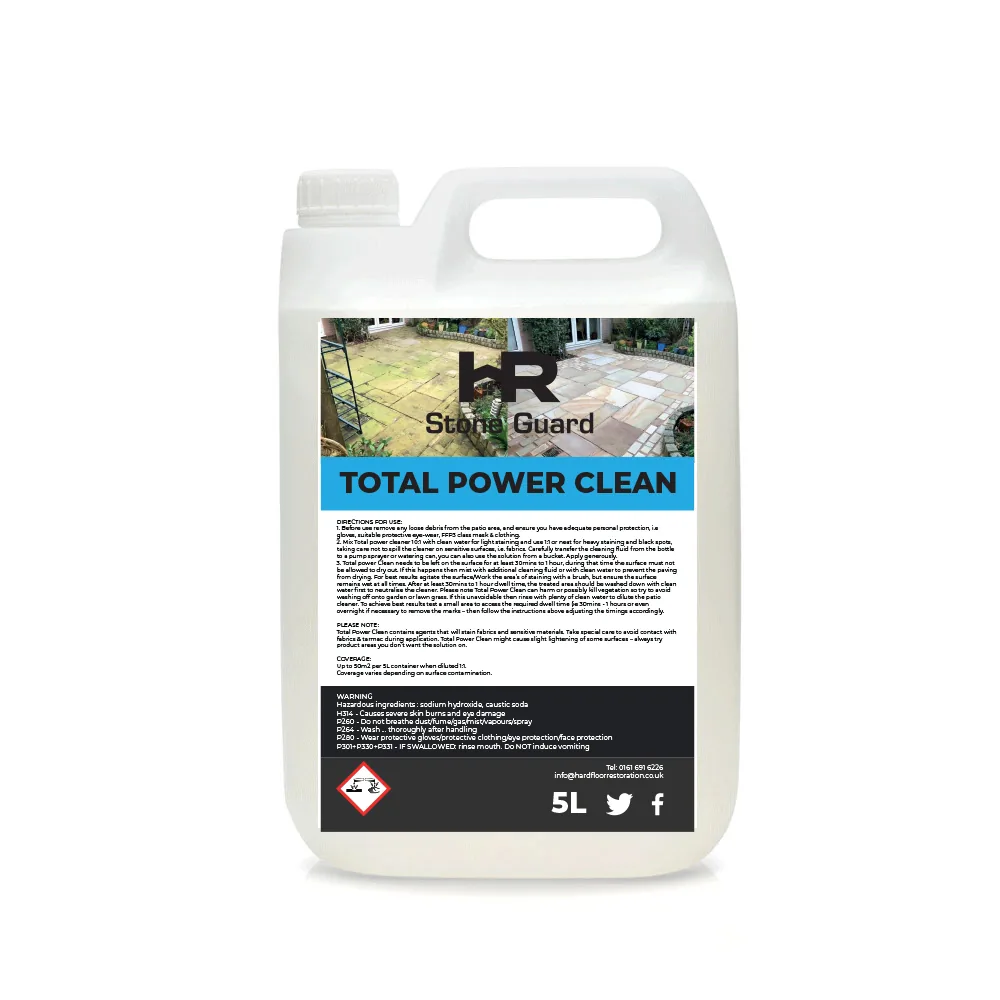
HR Total Power Clean
For algae, black spot, lichen and ingrained organic growth on compatible outdoor porcelain and paving.

HR Haze Remover
For compatible porcelain affected by grout haze, cement smears and lighter post-installation residue.

HR Efflorescence & Cement Remover
For heavier white mineral deposits, cement staining and compatible post-construction surfaces.

HR Rust Off
For orange or brown rust marks on compatible porcelain, sandstone and other suitable hard surfaces.

HR Oil Off
For suitable patios and joints affected by cooking grease, vehicle oil or another oily contaminant.
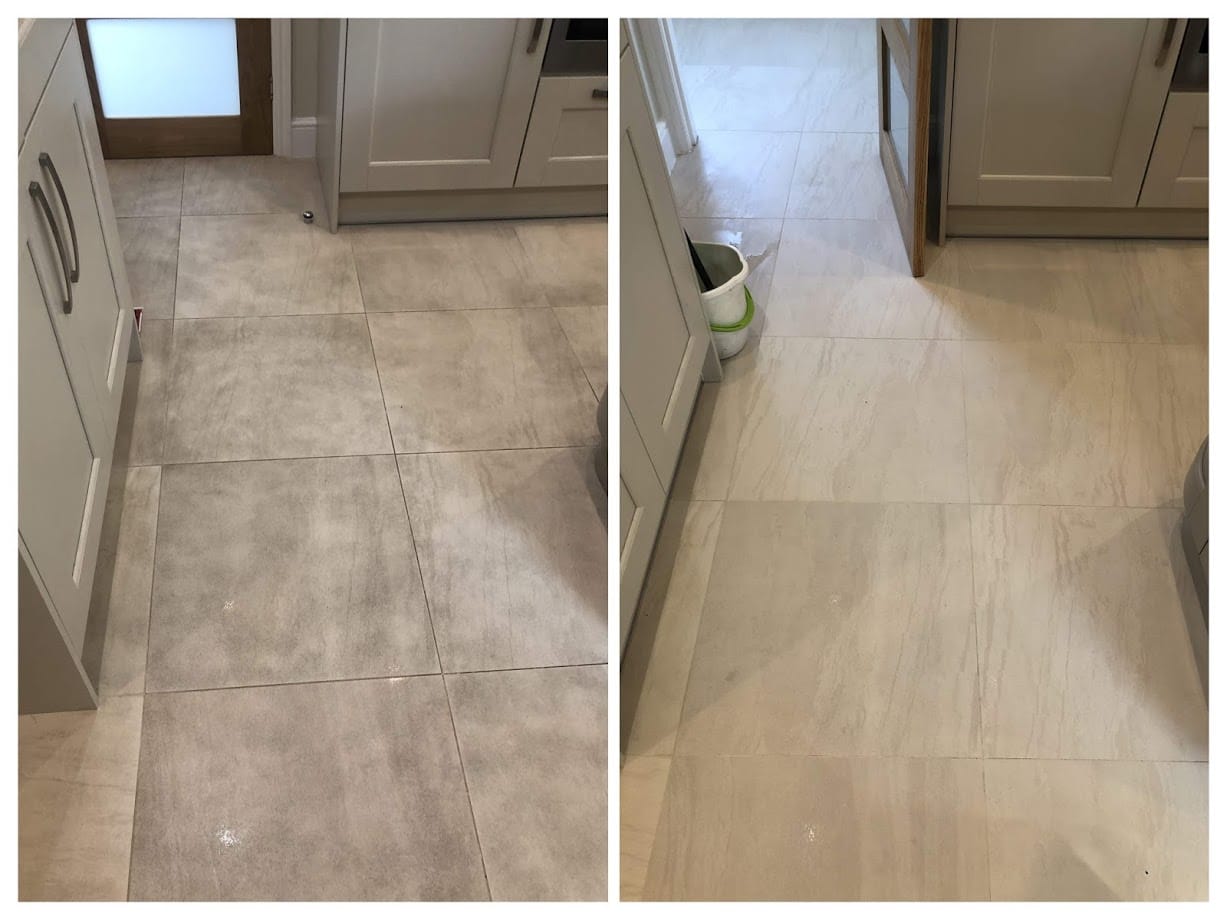
Real Porcelain Patio Cleaning Results
These images show genuine porcelain cleaning and preparation work. The correct product depends on the type of residue or staining present.




When Is a Porcelain Sealer Appropriate?
Porcelain tiles are generally dense, so sealing should not be treated as an automatic step. It depends on the tile finish, grout, installation, previous treatments and the protection required.
- The surface must be compatible with the selected Porcelain Sealer
- All dirt, haze, cement, oil and chemical residue must be removed first
- The patio must be completely dry before application
- A hidden test should confirm appearance, absorption and adhesion
- Do not seal over unresolved moisture or installation problems
HR Total Finish Matt is the relevant natural-look protection product in the current porcelain-care range. Read the full product information before deciding whether the individual patio requires sealing.


How to Clean and Protect a Porcelain Patio
The sequence matters as much as the product. Sealing or applying another treatment before the contamination is resolved can lock in the wrong result.
Identify the issue
Decide whether the mark is dirt, algae, grout haze, cement, rust, oil or another contaminant.
Test the product
Read the label and test a small hidden area using the correct dilution and contact time.
Clean methodically
Apply evenly, agitate where required and do not allow the cleaning product to dry on the surface.
Rinse and inspect
Rinse thoroughly, allow the patio to dry and check whether the actual contamination has been removed.
Seal only if suitable
Apply a compatible Porcelain Sealer only after full preparation, drying and a satisfactory test.
Everything You Need for Porcelain Patio Care
Browse the full porcelain product range, identify the correct cleaner for the problem, follow detailed application guidance or return to the complete stone-care shop.
Porcelain Care Products
Browse the complete WooCommerce category containing cleaners, removers and sealing products for compatible porcelain.
View the porcelain range › Detailed guidePorcelain Patio Cleaning Guide
Read the longer maintenance and application guide for routine cleaning and deeper outdoor contamination.
Read the porcelain guide › Algae and black spotAlgae and Black Spot Cleaner
See HR Total Power Clean product information and genuine results where the porcelain patio has algae, lichen or black spot.
View patio cleaner › Main storeComplete Stone-Care Shop
Return to the complete product-discovery hub for porcelain, sandstone, limestone, patios and hard floors.
Return to the shop ›Porcelain Cleaner and Porcelain Sealer FAQs
What is the best Porcelain Cleaner for ordinary dirt and grime?
What should I use for algae or black spot on porcelain?
How do I remove grout haze from a porcelain patio?
What removes cement or efflorescence from porcelain?
Does every porcelain patio need a Porcelain Sealer?
Can I seal porcelain immediately after cleaning?
Can rust marks be removed from porcelain?
Can I use one chemical for every porcelain patio problem?
The Right Porcelain Cleaner Protects the Patio Before a Porcelain Sealer Is Considered
First identify whether the patio has dirt, algae, grout haze, cement, rust or oil. Clean that problem correctly, rinse fully and inspect the dry surface.
Only then decide whether the individual porcelain installation needs compatible sealing protection.
SHOP PORCELAIN CLEANERS AND SEALERS