
Marble floor advice from restoration specialists
Marble Scratch Removal: How to Remove Scratches From Marble Floors
A line across a Marble floor may be a light surface mark, acid etching, worn polish or a deeper scratch. The correct repair depends on what has actually happened to the stone.
- Scratch assessment
- Diamond honing
- Precision polishing
- Manchester and Cheshire
Start with the correct diagnosis
Is It Really a Scratch?
Not every pale line or dull patch in Marble is a scratch. Marble can also be affected by acid etching, surface wear, cleaning residue and changes in the existing polish.
A genuine scratch is physical damage within the surface. An etch mark is a chemical reaction, often caused by acidic liquids or unsuitable cleaning products. Both can interrupt the reflection, but they may require different treatment.
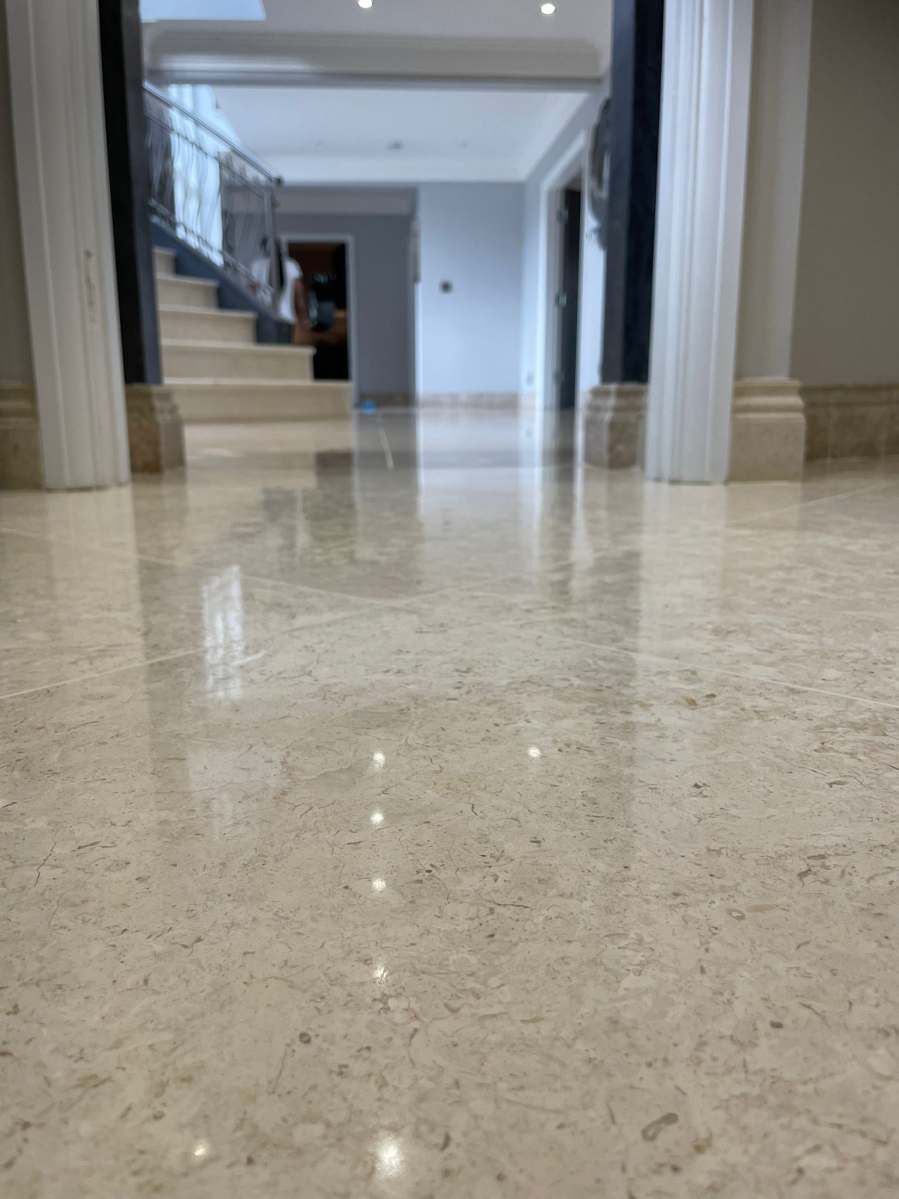
Different marks need different treatments
Can Scratches Be Removed From Marble?
Many Marble scratches can be reduced or removed, but polishing alone is not the answer to every mark. The depth of the scratch determines how far the surface must be refined before the final finish can be recreated.
Light Surface Marks
Fine marks within the existing finish may improve through controlled polishing after the floor has been correctly cleaned and prepared.
Visible Scratches and Etching
Where damage sits below the polish, the Marble normally needs to be honed with the appropriate diamond stages before it is repolished.
Deep Damage
Deeper scratches, lippage or heavy wear may require grinding and progressive refinement. Chips and cracks may also require a separate repair.
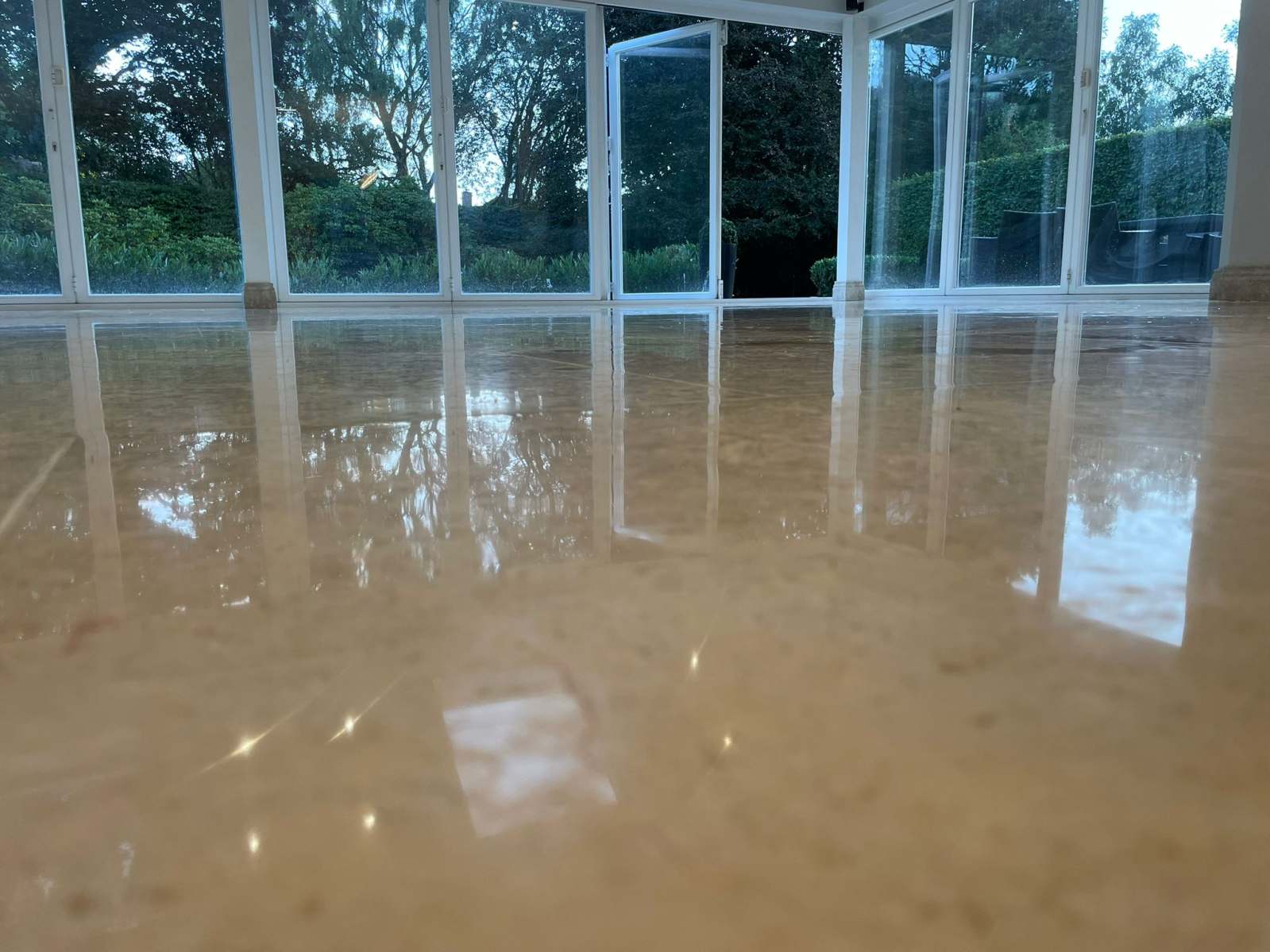
Polishing is the finishing stage
Why Marble Polish Cannot Remove Every Scratch
Marble polishing powder or a final polishing pad develops clarity and reflection at the surface. It cannot reliably remove damage that remains below that polishing level.
If a deeper scratch is polished without first being refined, the floor may become shinier while the scratch remains visible. It can even make the mark more noticeable because the surrounding reflection becomes clearer.
Professional Marble floor polishing and restoration may therefore include cleaning, repair, honing or grinding before the selected matt, satin, polished or high-gloss finish is produced.
Professional marble restoration
How We Remove Scratches and Restore Marble Floors
Marble scratch removal is not a single-treatment process. We first assess the depth of the scratches, etching and wear before selecting the least aggressive method capable of restoring an even, natural-looking finish.
Inspect the marble
We examine the scratches, worn areas, etching and existing finish to understand what has happened to the surface.
Identify the depth
Fine surface scratches may only require honing and polishing, while deeper damage can need more controlled correction.
Protect surrounding areas
Skirting boards, adjoining floors, furniture and nearby surfaces are protected before the restoration work begins.
Deep clean the floor
Contamination and residue are removed so that the true condition of the marble can be seen and treated correctly.
Hone away surface damage
Diamond abrasives are used where appropriate to refine scratches, etching and worn areas within the marble surface.
Refine the finish
The floor is worked through progressively finer stages to create a consistent surface without leaving obvious transitions.
Polish the marble
The marble is polished to the agreed matt, satin or high-gloss finish, depending on the stone and the result you want.
Final inspection
We inspect the floor from different angles and lighting positions before providing practical aftercare advice.
The correct treatment depends on the marble, the depth of the damage and the finish required. Our approach is to use only the level of correction the floor genuinely needs.
Real Marble restoration work
Marble Floors Restored by Hardfloor Restoration
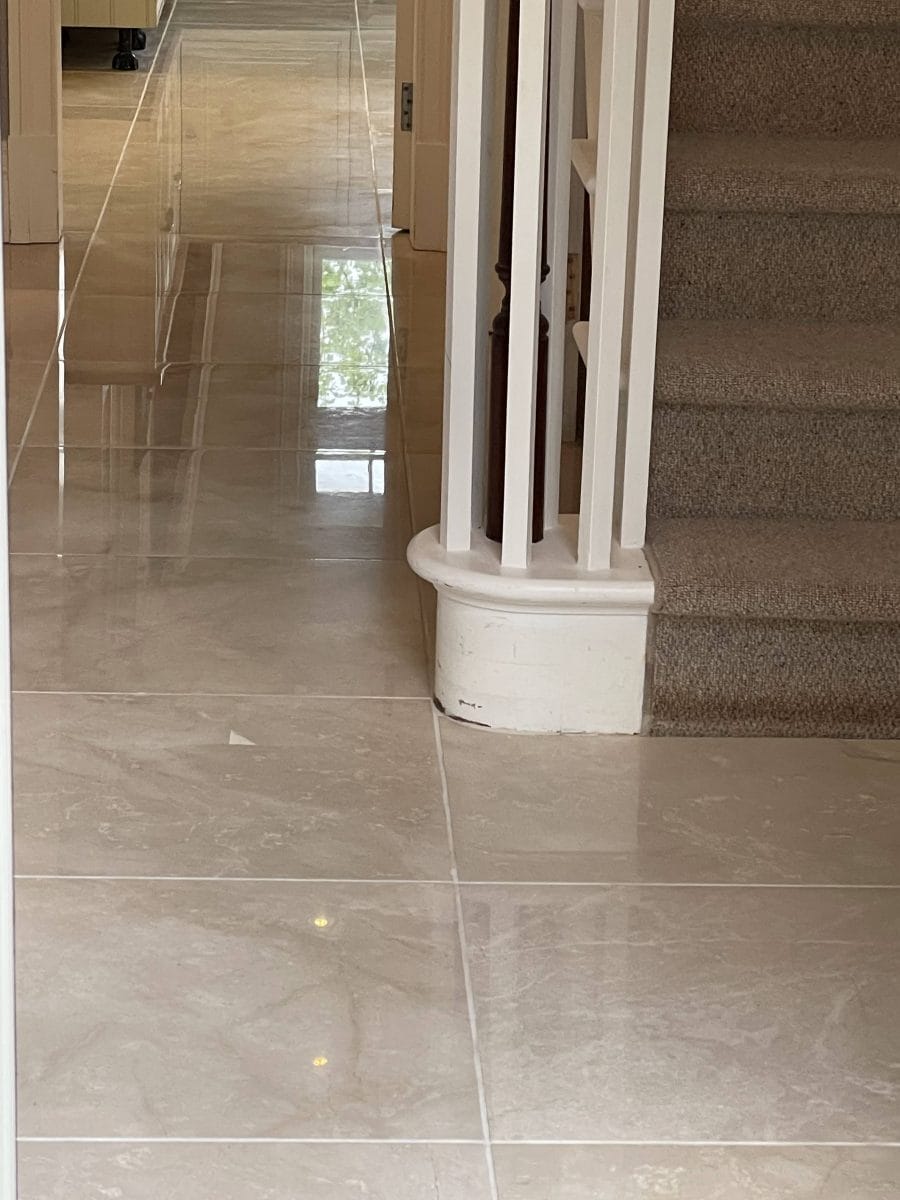
These are genuine Marble floors completed by our team. The correct finish is judged across the room, including reflection, consistency, edges, grout lines and connected areas.
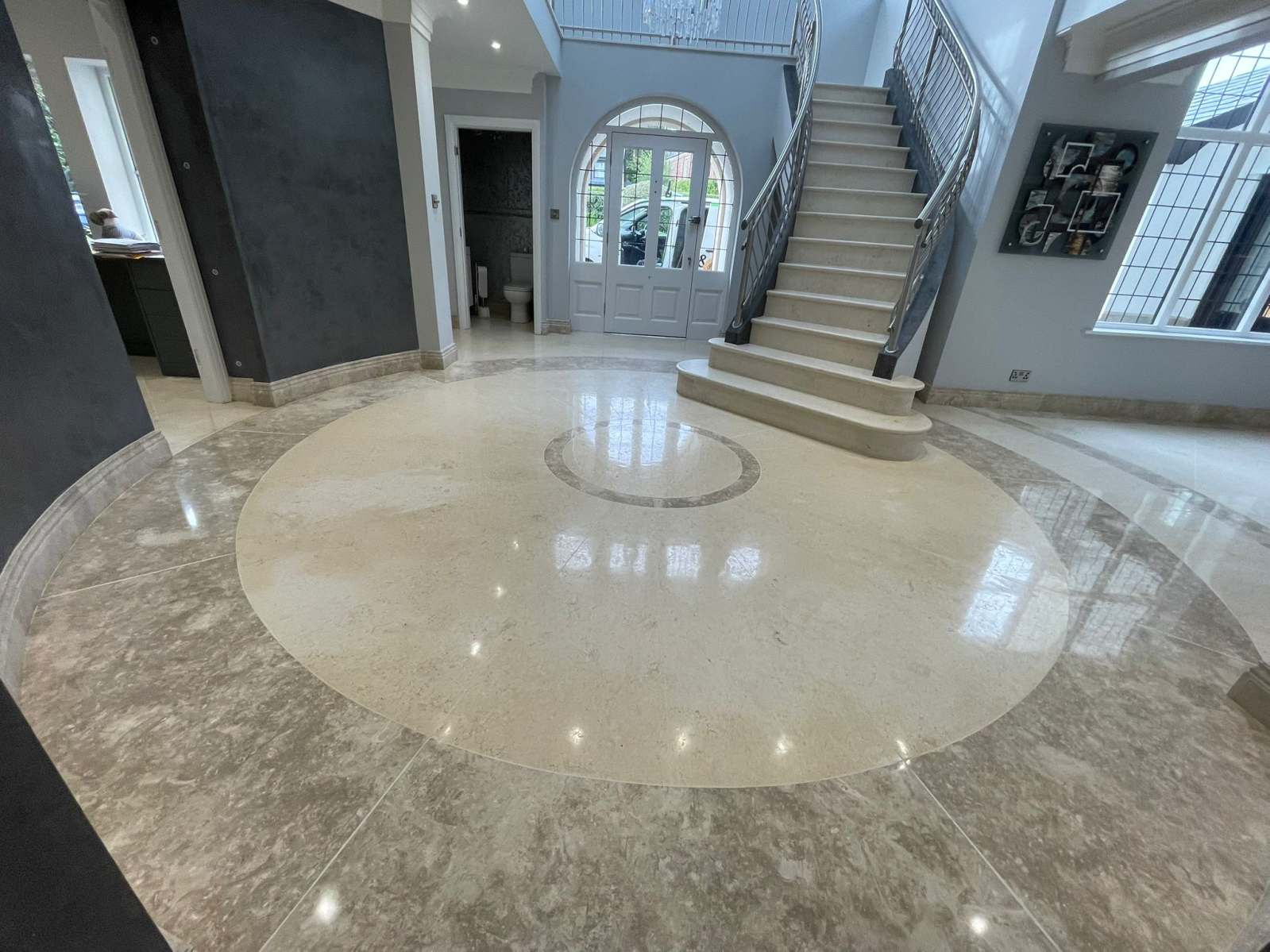
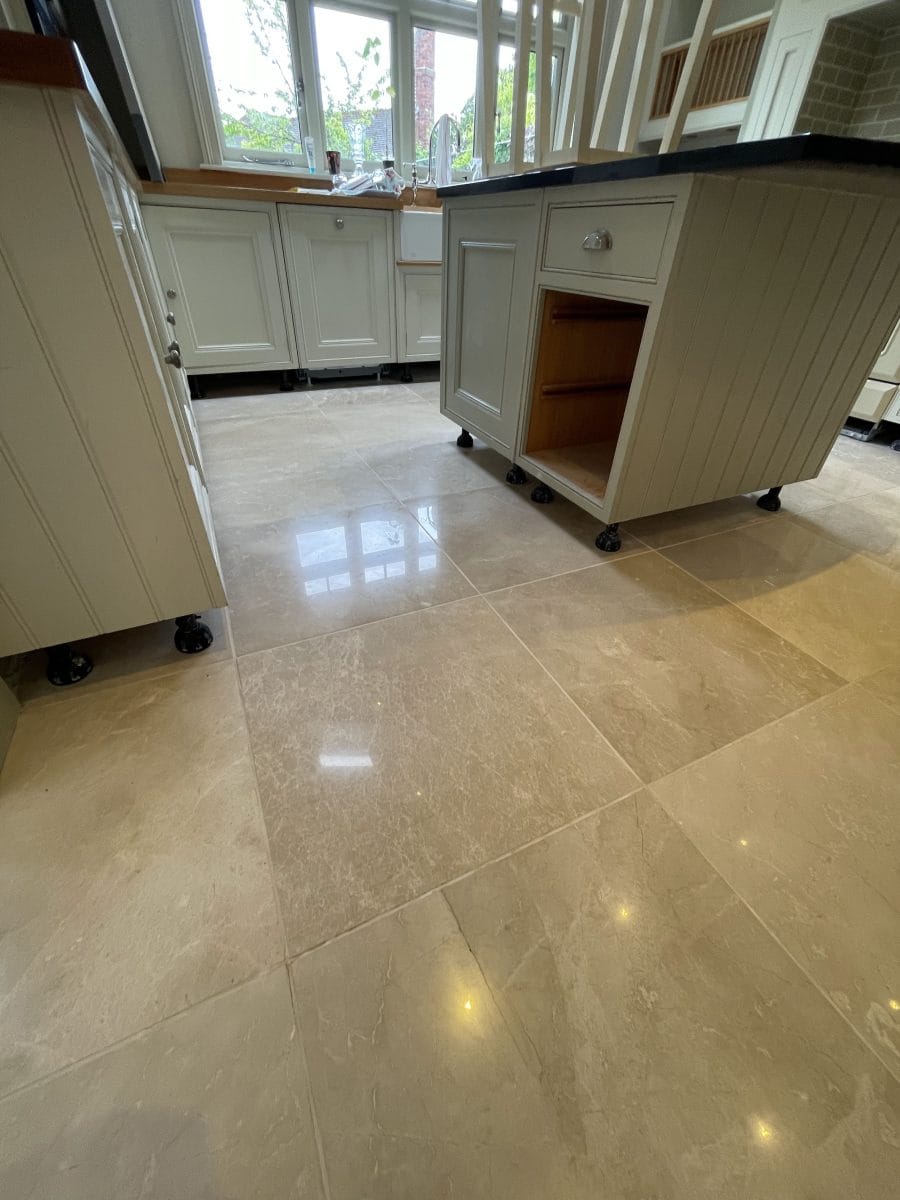


One repair can affect the complete room
When Does the Whole Marble Floor Need Polishing?
Treating one isolated scratch can leave a difference in sheen between the repaired area and the surrounding tiles. This is especially visible across larger rooms, connected spaces and floors with a stronger reflection.
If the floor also contains traffic wear, dull patches, etching or an inconsistent polish, restoring a wider area may produce a more natural and balanced result than treating one small section.
That does not mean every scratch requires a complete restoration. Clear photographs and an assessment help determine whether the sensible answer is a local repair, a test area or wider Marble floor restoration .

Common questions
Marble Scratch Removal FAQs
Can light scratches be polished out of Marble?
Some very light surface marks may improve during polishing. If the damage sits below the existing polish, honing is normally required before the final reflection is rebuilt.
Can deep scratches be removed from Marble floors?
Many deeper scratches can be reduced or removed through controlled grinding and honing. The realistic result depends on the depth, Marble type, tile thickness, installation and surrounding finish.
Is a dull white mark a scratch?
Not always. Pale or cloudy marks can be acid etching rather than scratches. Etching changes the surface finish and may require honing and polishing rather than ordinary cleaning.
Can one damaged Marble tile be repaired?
Local repair may be possible, but the sheen surrounding the repaired area must be considered. Sometimes a wider section needs refinement to create an even final appearance.
Do you remove Marble scratches in Manchester and Cheshire?
Hardfloor Restoration undertakes suitable Marble polishing, honing, repair and restoration projects across Manchester, Greater Manchester, Cheshire and the wider North West.
Before replacing damaged Marble
Show Us the Scratch and the Complete Floor
Send photographs of the mark, the surrounding tiles and the complete room. Tell us where you are and what you would like the finished Marble to look like. We can then advise whether the next step should be more photographs, a test area or a professional assessment.
Ask About Marble Scratch RemovalProfessional Marble polishing and restoration across Manchester and Cheshire.