
Best Patio Cleaner UK: Which Cleaner Is Right for Your Patio?
The best patio cleaner depends on what is making your patio dirty. Black spot, green algae, lichen, general grime and stains do not always need the same treatment. This guide will help you choose the right cleaner for your patio.

Real Results on Patios, Steps, Porcelain and Paving
The photographs below show genuine cleaning work. Results vary according to the surface, porosity, contamination, dilution, dwell time and application method.


What Is Making Your Patio Look Dirty?
Black spot, algae, grime, grease and white deposits are different problems. Find the one that looks most like your patio before choosing a cleaner.
Green or slippery patio
This is usually algae or other organic growth. It is common in damp or shaded areas and can make the patio look dirty and feel slippery underfoot.
Black spots that will not wash off
This is often patio black spot or lichen. If the marks stay behind after normal cleaning, you usually need a deeper patio cleaner rather than a light maintenance product.
General darkening and grime
Atmospheric dirt, organic residue and years of outdoor exposure can gradually hide the original colour of the paving.
Grease or cooking marks
Barbecue areas and outdoor kitchens may need a product suited to oily contamination rather than a cleaner designed only for algae.
White deposits or salts
White mineral deposits may be efflorescence, salts or another surface issue. Do not assume that a standard patio cleaner is the correct treatment.

Black spot is not ordinary loose surface dirt
A rinse or quick pressure wash may remove the loose contamination while established organic marks remain attached to the paving.
The correct deep cleaner is chosen because of what is present within the texture of the surface, not simply because the patio looks generally dirty.
Which Type of Patio Cleaner Is Best?
The right choice depends on what you need to remove, how quickly you want results and the type of patio you are cleaning.
| Cleaner or method | Best suited to | Typical speed | Main strength | Main limitation |
|---|---|---|---|---|
| Professional-strength deep cleaner | Black spot, algae, lichen and ingrained grime together | Fast, often within one treatment session | Targets several types of heavy contamination | Must be diluted, tested and rinsed correctly |
| Spray-and-leave maintenance cleaner | Routine algae, moss and low-effort maintenance | Slow, commonly days or weeks | Minimal agitation and no immediate rinsing on some products | Not always the best option for severe black spot or rapid visual change |
| Pressure washing | Loose surface dirt and resilient paving | Immediate | Strong visual improvement without a chemical dwell period | Can disturb pointing, damage softer surfaces and spread dirty water |
| Household bleach or improvised chemical mix | Budget-led cosmetic cleaning | Fast | Low initial cost | Greater uncertainty around surface compatibility, surrounding materials and safe use |
| Professional stone restoration | Severe contamination, failed coatings, staining or damaged high-value stone | Project dependent | Diagnosis, controlled preparation and a tailored result | Higher initial cost than a DIY cleaning product |
If your patio has black spot, algae, lichen and ingrained dirt together, a professional strength deep cleaner is usually the best place to start.
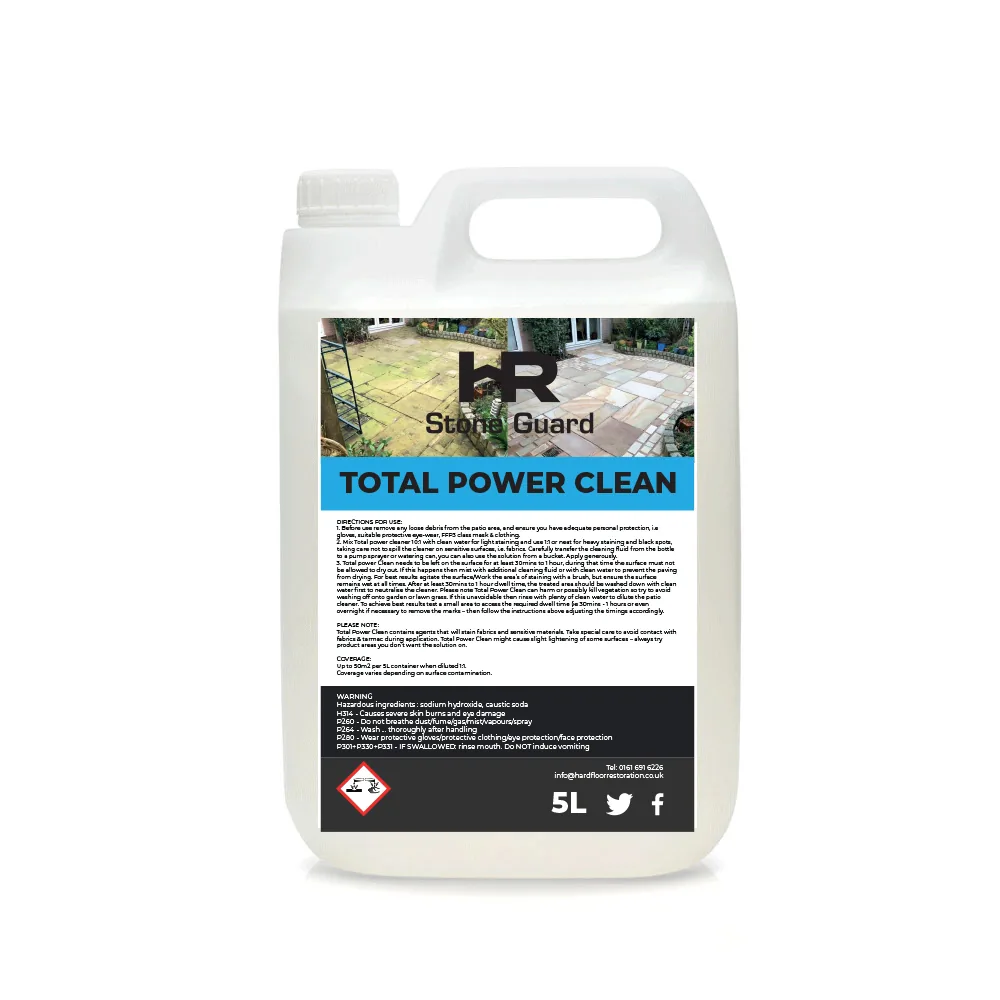
Best for Fast Deep Cleaning: HR Total Power Clean
HR Total Power Clean is our recommended patio cleaner where the surface has a combination of black spot, algae, lichen and ingrained outdoor grime and the owner wants a visible result without relying solely on pressure washing.
- Professional-strength concentrated formula
- Suitable for common patio and paving surfaces when used as directed
- Can be adjusted through dilution according to the level of contamination
- No pressure washer is required for the cleaner to work
- Supplied by a specialist stone-restoration company
- Expected shelf life of approximately 18 to 24 months when stored correctly
Fast UK delivery. Free delivery on orders over £100.
Which Patio Cleaner Is Right for Your Surface?
Your patio surface matters too. Sandstone, limestone, porcelain and concrete can all need slightly different care when choosing and using a cleaner.

Sandstone
Sandstone is porous and can hold organic contamination within its texture. Work methodically, control the dilution and rinse thoroughly.

Limestone
Limestone can be sensitive to unsuitable acidic products. Use a compatible cleaner, follow the label and test a hidden area first.

Porcelain
Dense porcelain often holds less contamination within the tile, but textured surfaces and grout joints can still collect algae and dirt.

Concrete and block paving
Textured surfaces may absorb more working solution. Coverage can reduce where the paving is porous or heavily contaminated.
How to Use a Professional Patio Cleaner Properly
A good product can still perform badly when the dilution, dwell time or rinsing is wrong.

Prepare and protect
Remove loose debris. Protect plants, fabrics, metals and nearby items. Wear the personal protection stated on the label.
Choose the dilution
Use a stronger mixture for severe contamination and the recommended maintenance dilution where suitable.
Apply and allow it to work
Apply evenly, maintain contact and agitate stubborn sections where required. Do not allow the cleaner to dry on the surface.
Rinse completely
Rinse thoroughly with clean water. Keep children and pets away during use and for 24 hours after the area has been fully rinsed.
How Much Patio Can One 5L Container Clean?
Coverage depends on how dirty your patio is, the surface and the dilution you need.
At the recommended maintenance dilution, one 5L container can cover up to approximately 250m² in suitable conditions.
Heavy black spot, porous paving or badly contaminated areas will normally use more product and reduce the total coverage.
Per 5L container at the recommended maintenance dilution in suitable conditions. Porous surfaces and heavier contamination will reduce coverage.
When to Stop Cleaning and Ask a Stone Professional
Some patio problems need more than a cleaner. If you have damaged stone, a failed sealer, deep staining or you are unsure what the surface is, get advice before applying a strong product.

Failed or peeling sealer
A failed coating may need professional stripping rather than stronger cleaning.
Rust, oil or deep stains
Specialist contamination can require a dedicated treatment rather than a general patio cleaner.
Damaged or eroded stone
Cleaning cannot repair crumbling surfaces, movement, broken pointing or physical damage.
Unknown material
Where the material or existing treatment is uncertain, test cautiously or arrange a professional assessment.
Best Patio Cleaner UK FAQs
What is the best patio cleaner in the UK for black spot?
What is the best low-effort patio cleaner?
What is the best patio cleaner without a pressure washer?
Can I use patio cleaner on sandstone?
Can I use patio cleaner on limestone?
Will one treatment remove every black spot?
When can pets and children return?
How long does the product keep?
How much does HR Total Power Clean cost?
So, Which Patio Cleaner Should You Choose?
For light green algae and routine maintenance, a slower maintenance cleaner may be enough. For loose surface dirt, careful pressure washing may be enough.
If your patio has stubborn black spot, algae, lichen and ingrained grime, our recommendation is HR Total Power Clean. It is the professional strength cleaner we supply for the deeper cleaning jobs a basic maintenance product may not solve.