
Travertine Repairs for Cracks, Holes & Damaged Floors
Are holes beginning to open, cracks appearing, old filler failing or tiles starting to move? When a travertine floor reaches this stage, another clean often isn't the answer.
We carry out specialist travertine repairs, including hole filling, crack repair, damaged tile repair and more complete travertine floor restoration where the surrounding stone also needs honing or polishing.
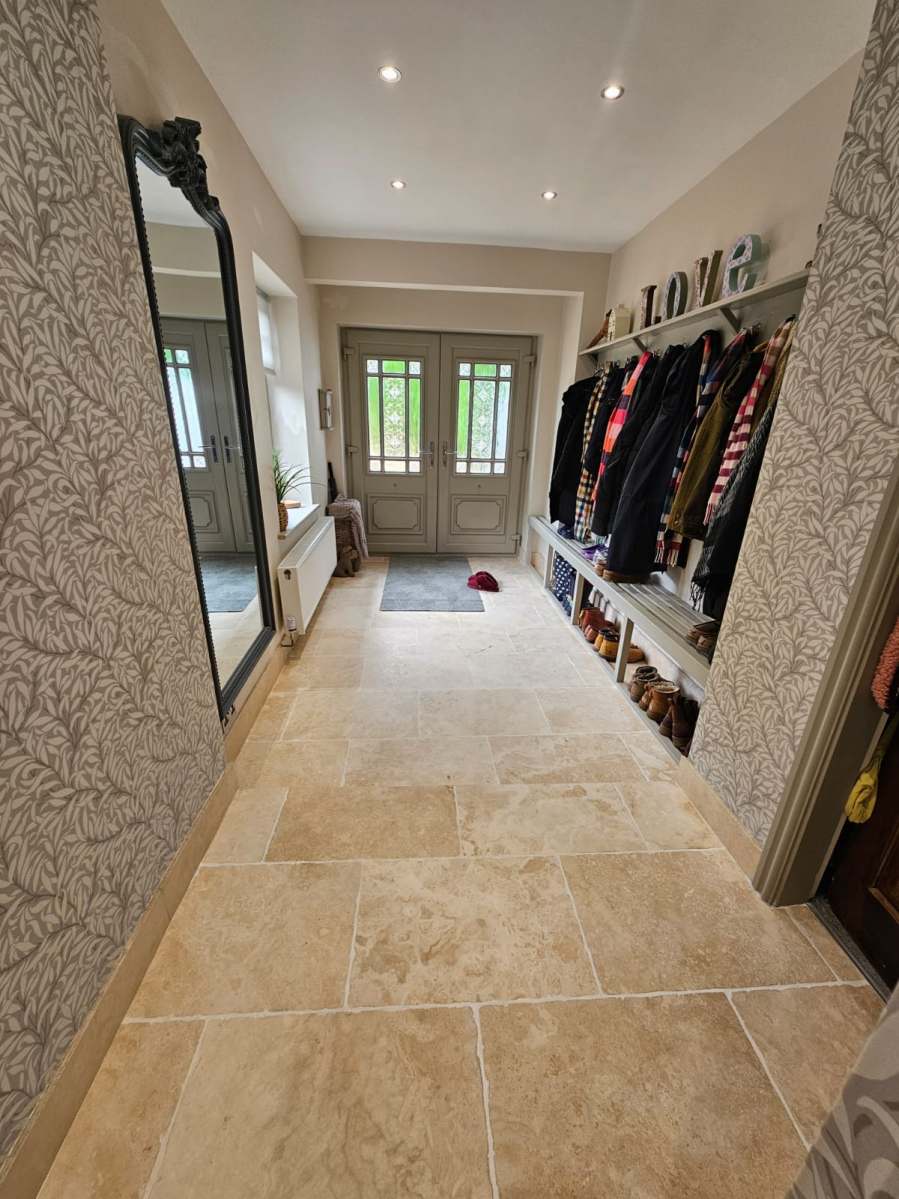
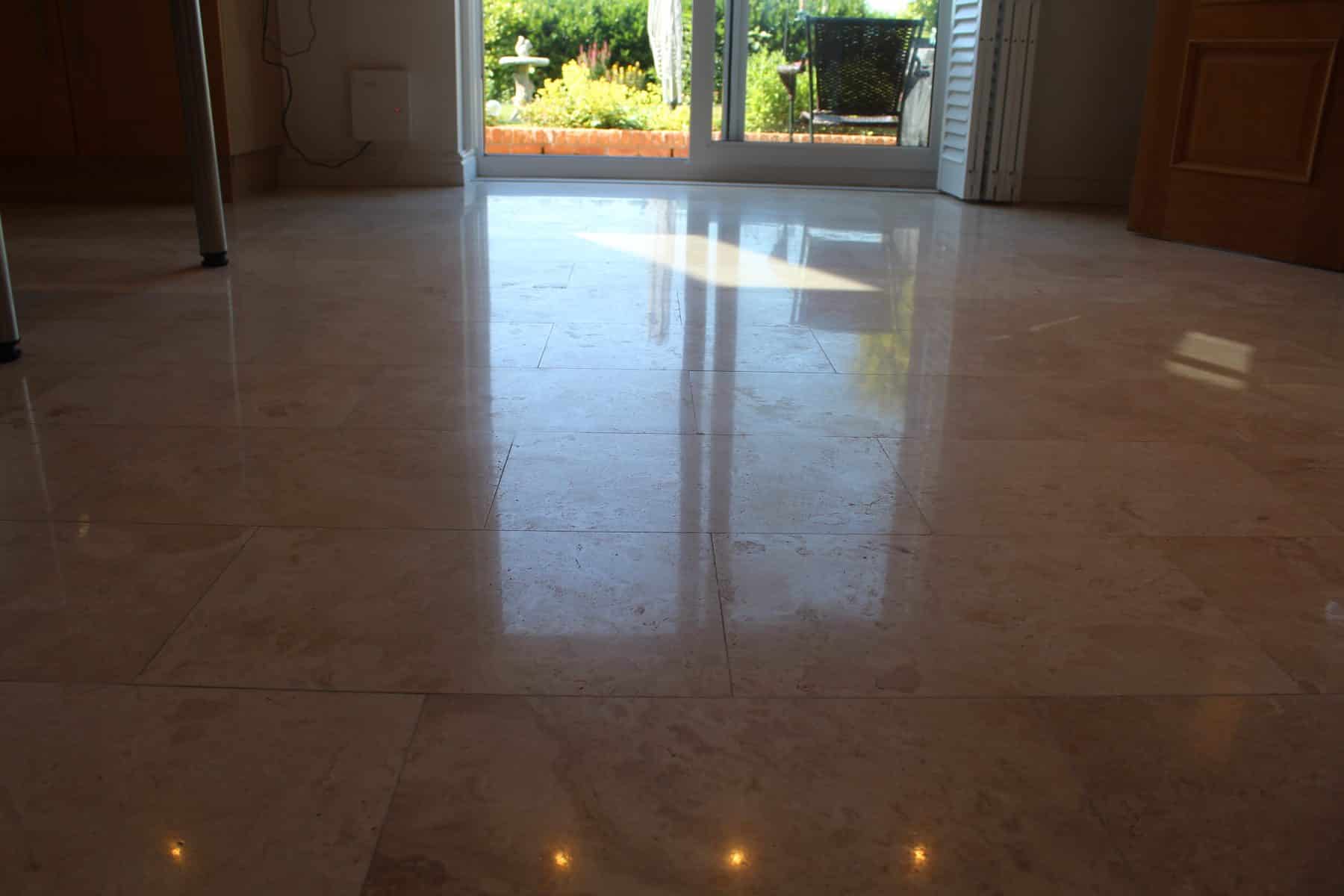

What Is Actually Happening to Your Travertine Floor?
Travertine naturally contains holes and voids, and over time the stone, filler and grout can begin to show different types of wear.
The important part is identifying what is actually failing. A hole opening up needs a different approach from a cracked tile, failed filler or a floor whose surrounding finish has become worn.

Are Holes Starting to Appear?
Small pits can appear as natural voids within the travertine become exposed or previous filler begins to break away.
The damaged area can be prepared, refilled and finished as part of a professional travertine hole repair.

Has an Old Repair Started Breaking Down?
Previous filler can gradually loosen, crack or disappear from the edges of natural voids.
Rather than repeatedly covering the same area, we can assess what has failed and decide how the damaged section should be repaired.

Cracked, Chipped or Damaged Travertine?
A damaged tile does not automatically mean the entire floor has to be replaced.
Depending on the cause and condition of the stone, travertine crack repair or individual tile repair may allow more of the original floor to remain.

Is the Damage Part of a Wider Worn Floor?
Sometimes the individual repair is only part of the problem. The surrounding floor may also be scratched, dull or visibly worn.
Once necessary repairs are complete, the floor can potentially be honed, refined and repolished as part of a wider travertine restoration.
You Don't Need to Diagnose It Yourself.
Show us what you are seeing. We can begin by looking at the holes, cracks, previous repairs and surrounding finish before discussing what we would investigate next.
Repairing the Damage Is Only Half the Job
Once cracks, holes and damaged areas have been repaired, the surrounding floor may still be worn, uneven, scratched or noticeably dull.
This is where a more complete travertine floor restoration can bring the repair and the existing stone back together as one finished surface.
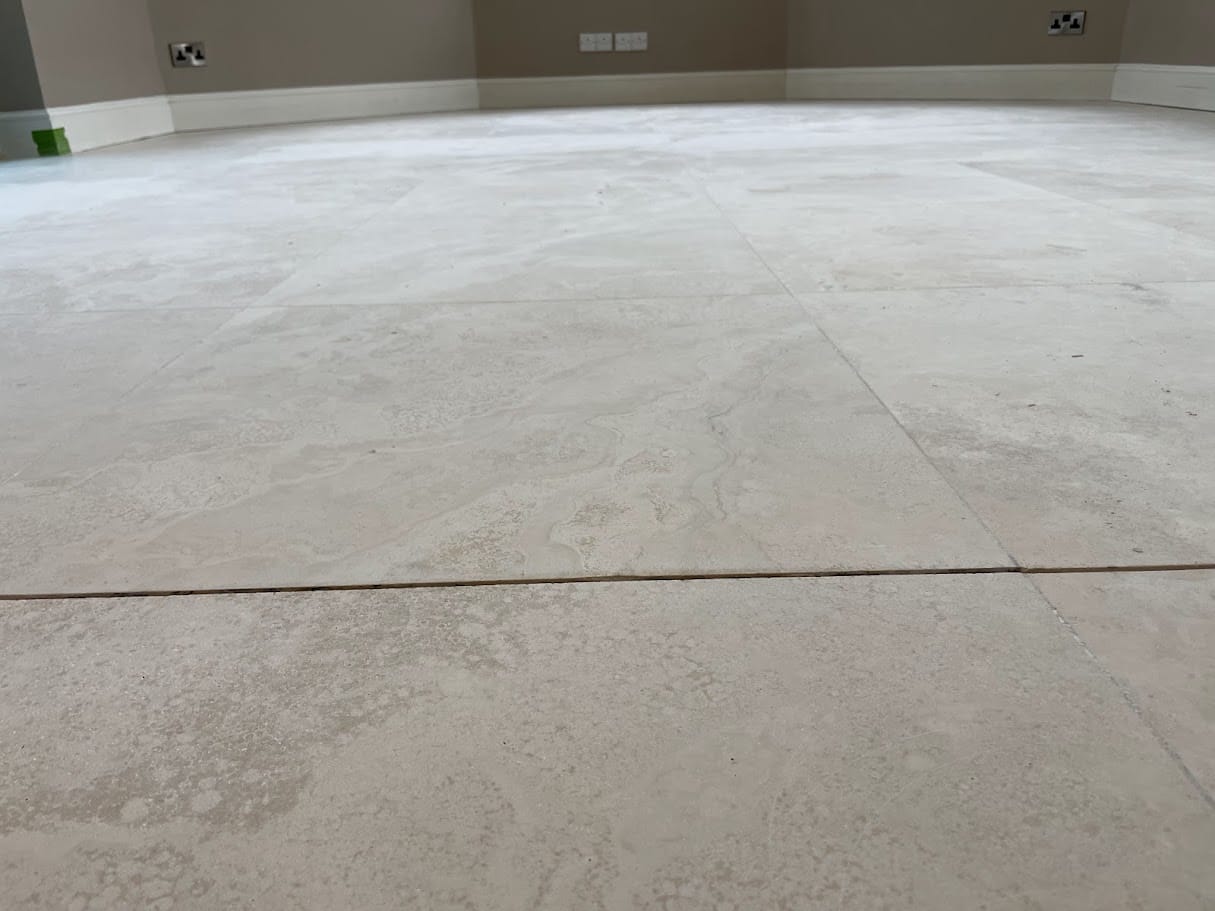
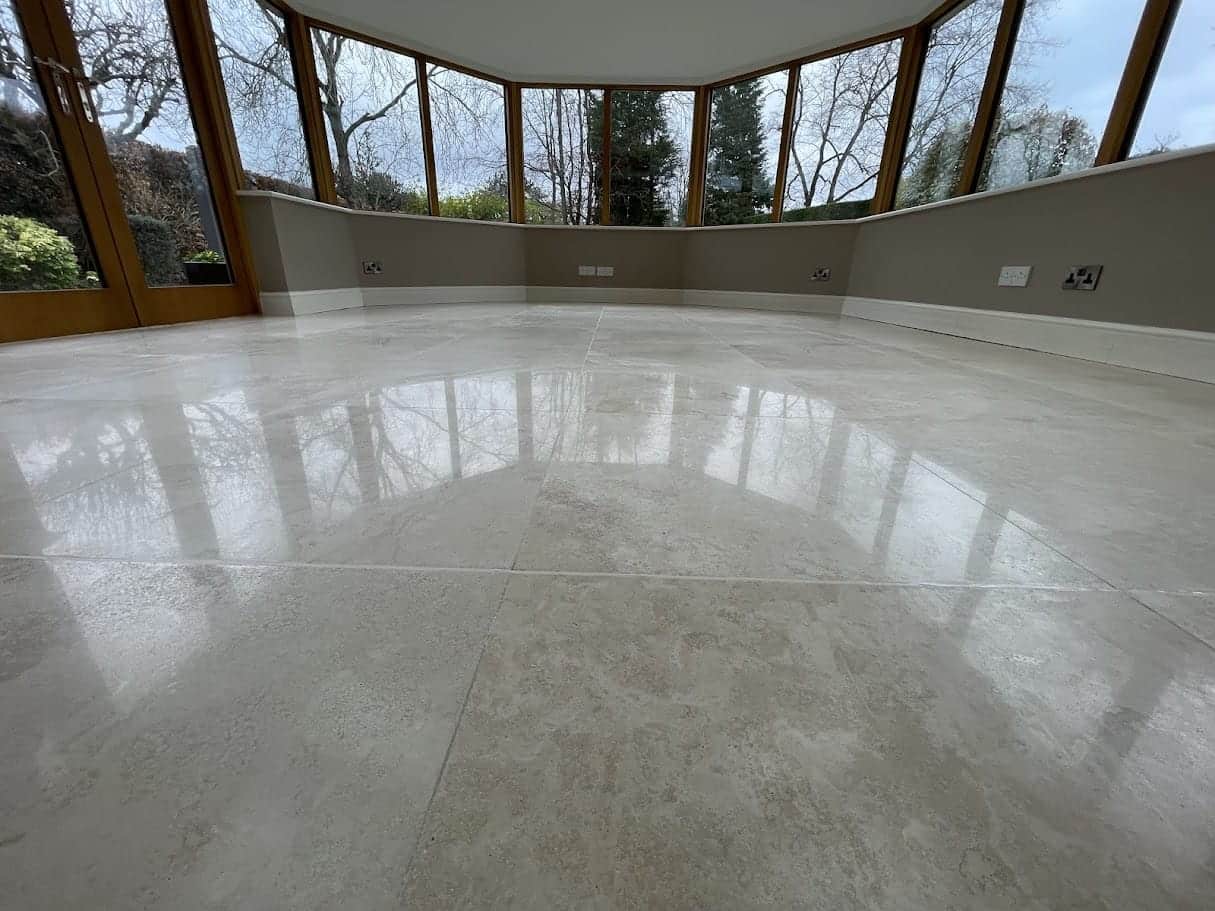
The Repair Shouldn't Be the Only Area That Looks Better.
Where a travertine floor needs wider restoration, our aim is to treat the repair as part of the whole floor. That can mean filling damaged areas first, then grinding, honing or polishing the surrounding travertine so the final result feels consistent rather than like a patch surrounded by an older worn surface.
Tell Us What’s Happening to Your Travertine Floor
Holes, cracks, failed filler or a floor that has lost its finish? Send us a few details and, if possible, some photos. We’ll look at what you have and help you understand whether it needs a local repair, refinishing or a more complete restoration.
No pressure. No obligation. Just a clear starting point for what can be repaired and restored.
Why Do the Holes Keep Coming Back?
One of the most common things we hear is: “We had the holes filled before, but they have started appearing again.”
Travertine naturally contains voids within the stone. As the floor ages, hidden areas can open and older filler can fail.

From Worn Travertine to a Floor You Want to Look at Again
When you've lived with damage, dull patches and previous repairs for long enough, it is easy to start seeing the whole floor as the problem.
Once the necessary work has been carried out, you begin noticing the travertine again rather than only the wear.
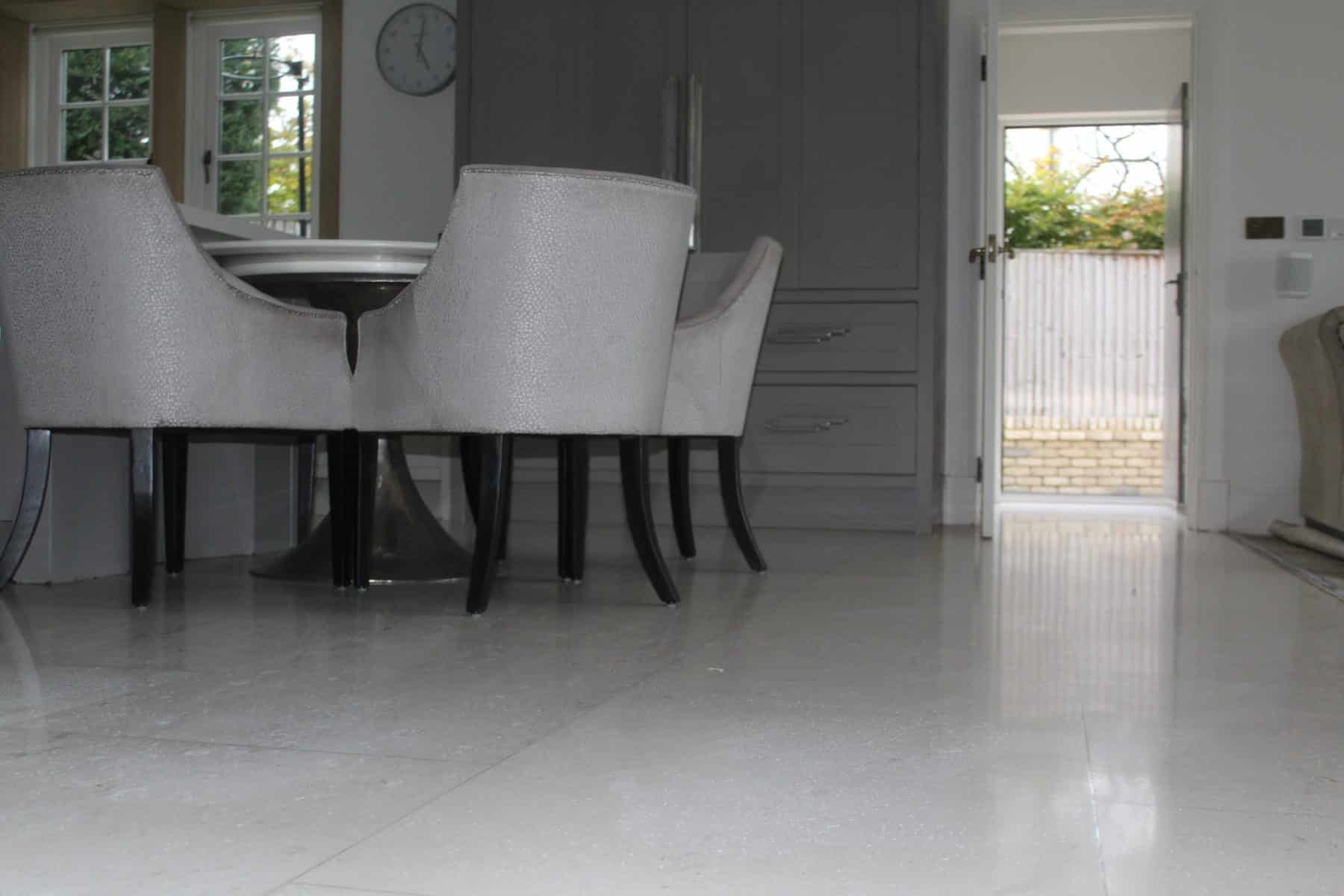


Look at the Floor Again — Without Automatically Seeing the Damage.
Good restoration is not about making natural stone pretend it has never been used. It is about dealing with the problems, improving the surface where needed and allowing the character of the travertine to become the thing you notice again.
Send us a few photographs and we can begin by looking at what appears repairable and whether wider restoration may be required.
What Will Your Travertine Floor Actually Need?
Two travertine floors can look similar from across the room and still need completely different treatment.
One may only need a few local repairs. Another may need holes filled and the surrounding stone honed. A more worn floor may benefit from a fuller restoration. We would rather establish what the floor needs first than sell you work it does not.
Not Every Travertine Floor Needs the Same Treatment.
The condition of the stone, previous repairs, the level of wear and the finish you want all influence the process we would recommend.
Send Us a Few Photos Before Deciding What Needs Doing.
Show us the damaged areas and, if possible, one photograph of the wider floor. That gives us a much better starting point for discussing whether you are looking at a local travertine repair, repair and refinishing, or a more complete floor restoration.
Before You Decide What to Do With Your Floor
Can holes in a travertine floor be repaired?
Can cracked travertine tiles be repaired?
Does the whole floor need polishing after a repair?
Is it better to repair or replace a travertine floor?
Show Us What Is Happening to Your Floor.
You don't need to know whether it needs filling, repairing, honing or a complete restoration. Start by showing us what you can see.
- Take a few clear photographs of the damaged areas
- Include one wider photo showing the whole floor
- Tell us what you have noticed and what you would like to improve
Ready to Find Out What Your Travertine Floor Needs?
You’ve seen what can cause the damage and the different ways a travertine floor can be repaired and restored. Now show us yours and we’ll help you work out the next step.
Repair where possible. Restore where worthwhile. Replace only where necessary.