

Limestone Polishing Guide — How to Restore Shine, Remove Etching & Protect Your Floors
Intro: Limestone is a beautiful, timeless floor surface — but it doesn’t behave like porcelain or concrete. If you’re searching for limestone polishing, this guide explains why limestone dulls, how to safely clean and polish it, and when you need a professional restoration to get a true finish that lasts.
Whether your floor is in Manchester, Cheshire or beyond, you’ll learn how to:
remove stains and etch marks
hone and polish limestone
fix surface damage safely
seal for protection and easier maintenance
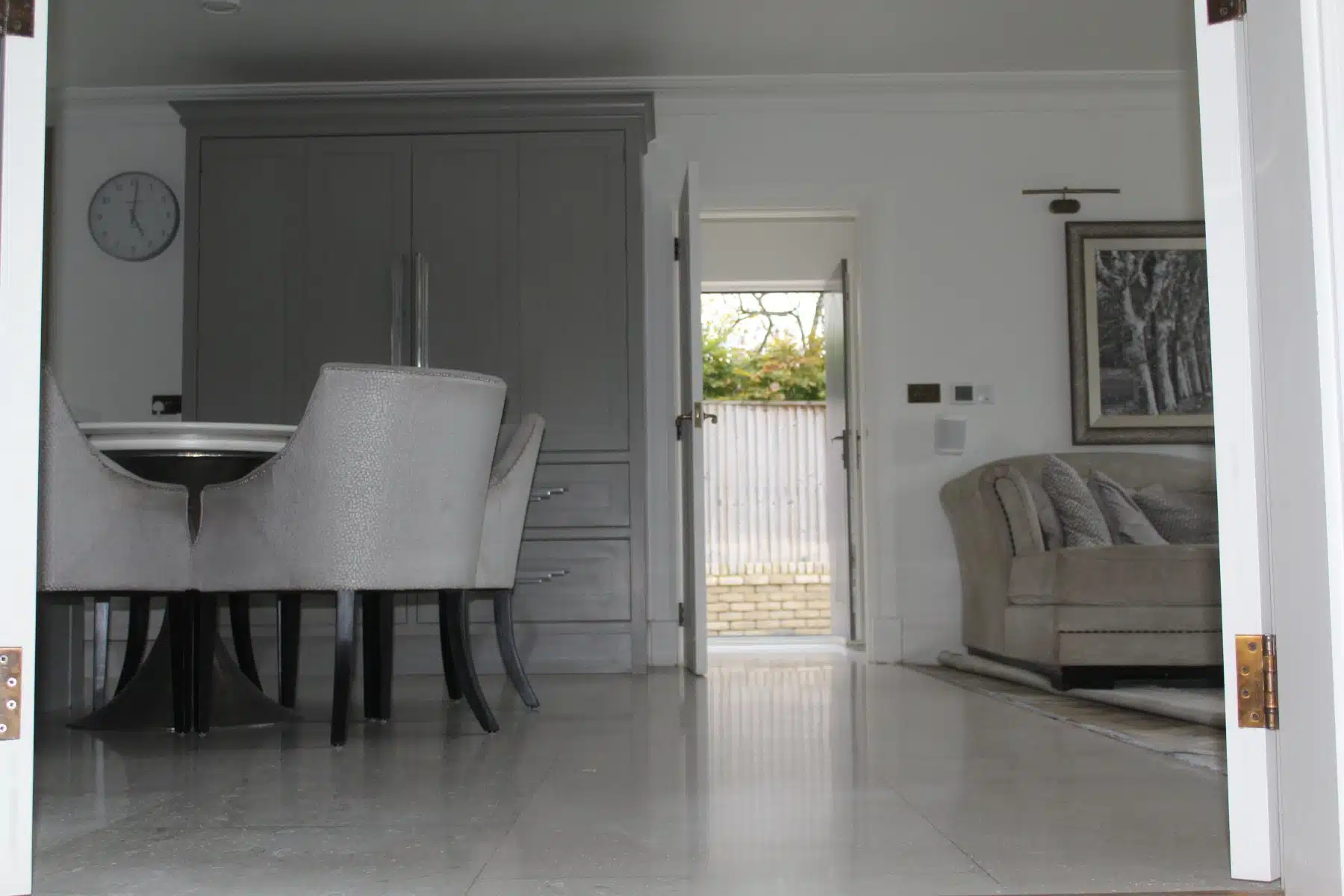
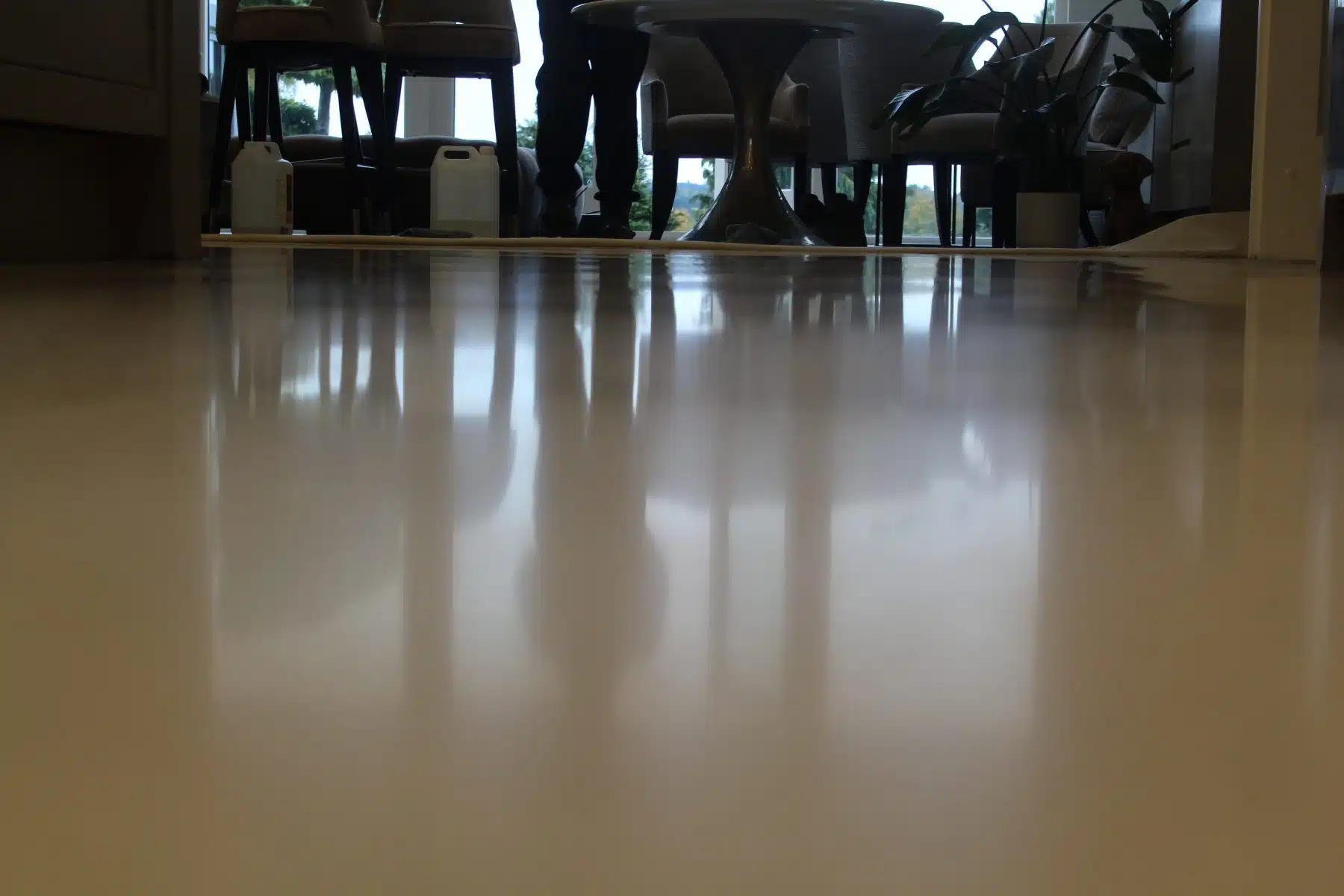
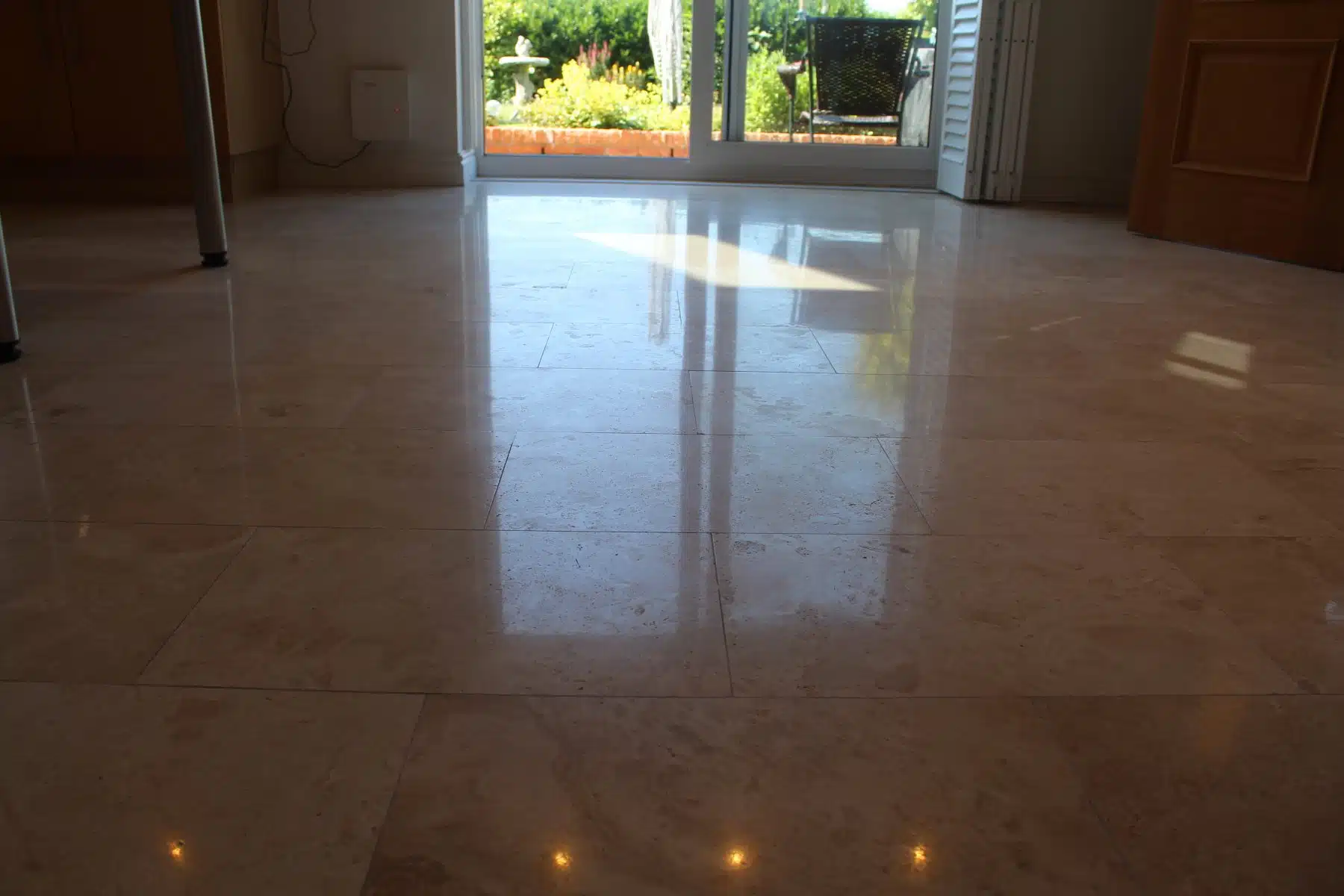
Why Limestone Loses Shine (and Why Ordinary Cleaning Fails)
Limestone is a calcitic stone, meaning it’s softer and more reactive than granite or porcelain. Everyday acids, even vinegar can leave:
dull patches
etch marks
micro-scratches
grout haze
Normal cleaning just moves surface grime around. For real shine and levelness, the stone must be:
1. deep cleaned
2. surface honed and polished
3. protected with a quality sealer
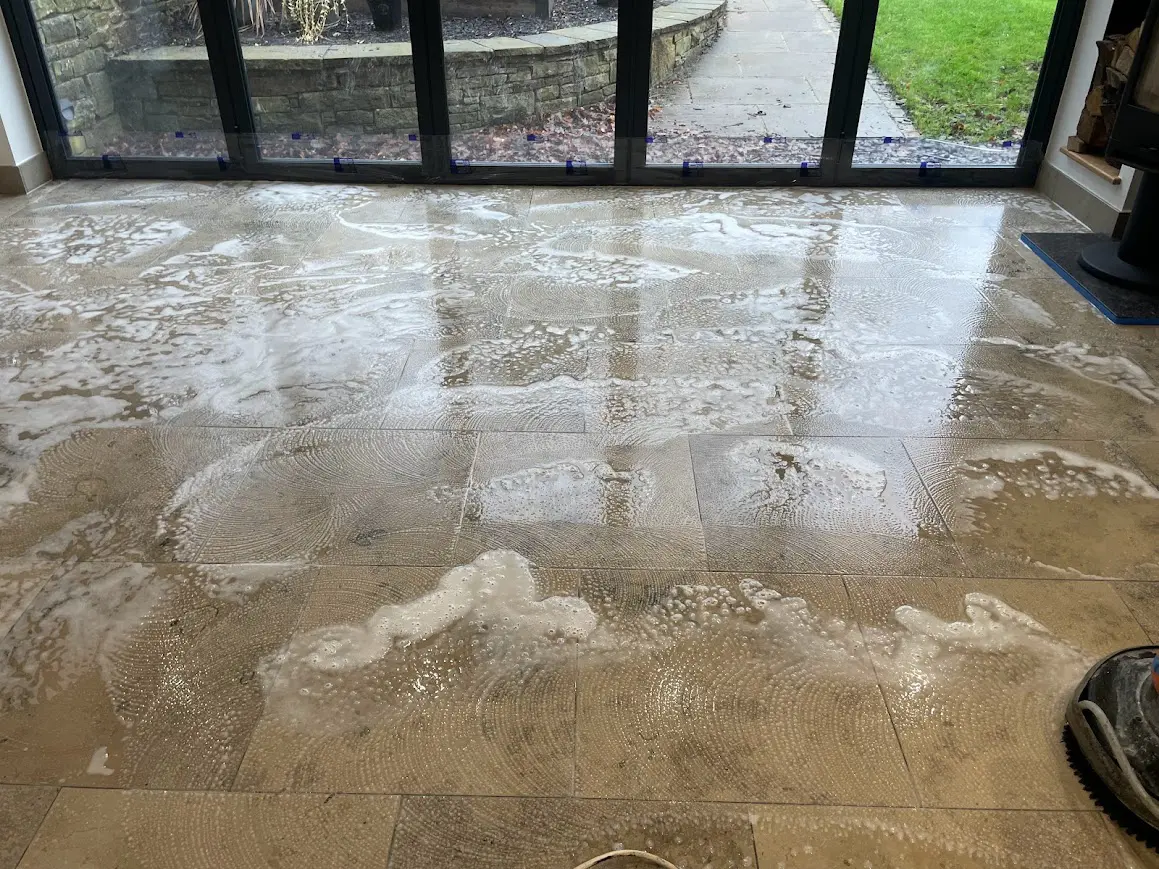

Limestone Polishing – Step-by-Step (Safe & Effective)
- Remove grit, debris & traffic film
Use pH-neutral cleaners — never acids. - Inspect the surface
Check for etches, dull patches, scratches or pits. - Honing (200/400 grit)
This removes surface damage without over-polishing. - Refining & polishing (800+ grit)
Builds clarity and prepares the stone for protection. - Sealing
A good sealer repels oil, water and everyday stains — and makes cleaning easier.
What Causes Limestone Etching & Surface Damage
Limestone reacts with:
Coffee
Wine
Acids (even vinegar)
Detergent residues
Algae & grime build-up
Etch marks aren’t just dirt — they are surface reactions where minerals have been removed. Proper polishing reverses these at a structural level.
Does Limestone Get Slippery After Polishing?
Contrary to myths, polishing doesn’t make it dangerously slippery if done properly:
subtle satin finishes balance grip and sheen
professional slip testing can tailor your surface
We can supply slip-resistance data if needed for facilities, hotels or commercial spaces.

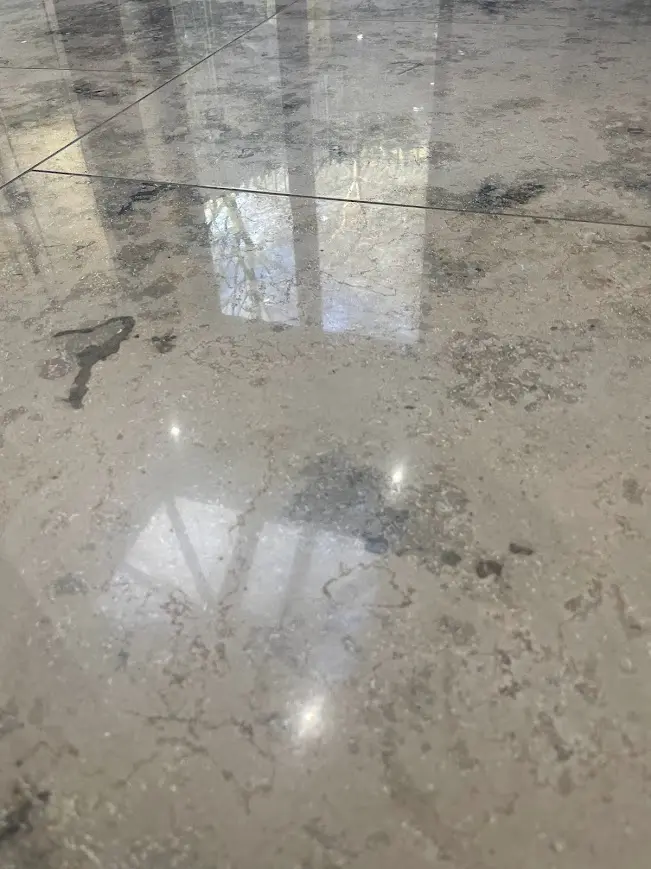
Limestone Polishing vs Limestone Sealing – What’s the Difference?
| Action | What it Does |
|---|---|
| Cleaning | Removes loose dirt & surface film |
| Honing | Removes etch & small scratches |
| Polishing | Restores sheen & reflective quality |
| Sealing | Protects against stains & future penetration |
A polished surface looks better and is easier to maintain — but sealing is essential for long-term stain resistance.
Signs You Need a Professional Limestone Restoration
You may need pro service if:
✔ Ordinary mopping leaves dull, grey surface
✔ Scratches don’t disappear after cleaning
✔ You see large etch marks or pits
✔ Stain removal fails repeatedly
✔ You want a flat seamless surface
This is where a DIY approach ends and controlled polishing & honing begins.


Travertine & Limestone Polishing in Manchester & Cheshire
We work across Greater Manchester, Cheshire, Altrincham, Hale, Bowdon, Alderley Edge, Wilmslow and surrounding areas.
Our technique includes:
dustless extraction
pH-safe chemistry
multiple grit progression
professional sealing
How Much Does Limestone Polishing Cost?
Typical pricing depends on:
square metres
condition of the floor
presence of scratching or damage
accessibility
Send photos, room size and postcode for a fast, bespoke quote.
FAQs About Limestone Polishing
Q: Can I polish limestone myself?
A: Light cleaning and buffing can help, but true polishing + repair requires the right pads, machines, and sealing to avoid damage.
Q: How often should limestone be polished?
A: Typically every 2–5 years depending on traffic, spills and maintenance level.
Q: Is polished limestone hard to maintain?
A: No — with a good sealer and pH-neutral products, it wipes clean with minimal effort.
