
Patio Cleaning Solution: What Should You Use to Clean Your Patio?
The right patio cleaning solution depends on what is making your patio dirty. Black spot, green algae, lichen, general grime and white marks are different problems and they do not always need the same treatment.
Use this guide to work out what you are dealing with, which type of patio cleaner is most suitable and what to check before you start cleaning.
Advice from Hardfloor Restoration, based on cleaning and restoring outdoor stone, paving and porcelain.
See What Proper Patio Cleaning Can Actually Remove
These are genuine Hardfloor Restoration cleaning projects. Different patios need different treatment, but these examples show the sort of contamination a suitable patio cleaning solution can tackle.


Results depend on the surface, level of contamination, dilution, application and whether more than one treatment is needed.
IDENTIFY WHAT IS ON MY PATIOWhat Is Making Your Patio Look Dirty?
Before choosing a patio cleaning solution, look at the problem in front of you. Green algae, black spot, lichen, general grime and white marks can need different treatment.
Green Algae and Organic Growth
A green film that becomes slippery when wet is often organic growth. Light contamination may be easier to deal with than established black spot, so you may not need the strongest cleaning approach.
Established Black Spot
If the marks remain after loose dirt has been washed away, ordinary maintenance cleaning may not be enough. Established black spot can need a stronger patio cleaner and more careful application.
Lichen
Lichen can form stubborn patches across paving and natural stone. More established growth may need a deeper cleaning treatment rather than a simple surface wash.
Dirt and Ingrained Grime
If the whole patio has gradually become dull or dirty, the problem may be accumulated grime rather than one particular stain. The surface and severity should guide the cleaning method.
Grease and Food Marks
Grease is a different cleaning problem from algae or black spot. On porous stone it can soak below the surface, so a general patio cleaning product may not always be the right answer.
White Deposits and Unusual Staining
Do not assume every mark needs a general patio cleaner. White deposits can have a different cause and should be identified before applying stronger cleaning chemicals.
Not sure what you are looking at?
Do not choose a cleaner just because the bottle says patio cleaner. First identify the contamination and check what your patio is made from. This matters even more with valuable natural stone, unknown coatings or unusual staining.
| What you can see | What you need | Recommended product | Why | Important check |
|---|---|---|---|---|
| Green algae | Cleaner for organic growth | HR Total Power Clean | Designed for algae and organic contamination on suitable patio surfaces. | Use the correct dilution and check surface suitability first. |
| Established black spot | Strong deep cleaning solution | HR Total Power Clean | Made for stubborn black spot, algae, lichen and ingrained outdoor contamination. | Severe contamination may need stronger permitted dilution or another treatment. |
| Lichen and stubborn organic growth | Deep cleaner for organic contamination | HR Total Power Clean | A stronger option where ordinary maintenance cleaning is not enough. | Test first and follow the current product instructions. |
| General ingrained patio grime | Patio cleaning solution matched to the level of contamination | HR Total Power Clean | Useful where the patio has become heavily weathered, dirty and contaminated outdoors. | First make sure the marks are ordinary grime rather than a specialist stain. |
| Oil, grease and cooking marks | Specialist oil and grease remover | HR Oil Off | For oily contamination such as barbecue grease, cooking oil and other suitable oil stains. | Check the surface and product instructions before treating porous stone. |
| White, chalky or cement deposits | Specialist efflorescence and cement treatment | HR Efflorescence & Cement Remover | Designed for suitable efflorescence, cement residue and related mineral deposits. | Identify the deposit and confirm surface compatibility before use. |
| Rust, iron or orange staining | Specialist rust and iron stain remover | HR Rust Off | For identified rust and iron staining on compatible patio and paving surfaces. | Rust treatments are specialist chemicals, so check the surface and test first. |
What Is the Best Way to Clean Your Patio?
You do not always need the same method. What works on loose surface dirt may do very little to established black spot, and using more pressure is not automatically the answer.

The right method depends on what is on the surface. Stubborn organic contamination often needs more than simply blasting the patio with water.
Patio Cleaning Solution
A suitable deep cleaning product is the better starting point when the problem is black spot, algae, lichen or ingrained organic contamination rather than simply loose dirt.
Good choice when: the patio has stubborn organic growth that ordinary washing is not removing.
Pressure Washing
A pressure washer can remove loose dirt and surface contamination quickly, but pressure alone may leave established black spot and other stubborn marks behind.
Watch for: excessive pressure around softer stone, joints, pointing and vulnerable surfaces.
Maintenance Patio Cleaner
If your patio is already in reasonable condition and you are dealing with lighter green growth or routine outdoor dirt, a maintenance treatment may be all you need.
Good choice when: you are maintaining a cleaner patio rather than trying to recover a heavily contaminated one.
Homemade Patio Cleaning Solutions
Household cleaning advice often ignores what the patio is made from. A homemade patio cleaning solution that seems harmless on one material may be unsuitable for another.
Our advice: do not mix cleaning chemicals and do not use an improvised treatment until you know it is suitable for the surface.
Specialist Patio Cleaning Products
Oil, rust, iron staining and cement deposits are different from ordinary patio grime. These problems are better matched to a specialist product designed for that particular contamination.
Examples: HR Oil Off for suitable oil stains, HR Rust Off for identified rust and iron staining, and HR Efflorescence & Cement Remover for suitable mineral and cement deposits.
Professional Patio Cleaning
If you would rather not clean the patio yourself, Hardfloor Restoration provides professional stone and patio cleaning in Manchester and Cheshire.
This can also be the better route for valuable natural stone, heavy contamination, unusual staining, damaged surfaces or patios where previous cleaning attempts have not worked.
ASK US TO CLEAN IT FOR YOUCan You Clean Paving Slabs Without a Pressure Washer?
Yes. A pressure washer is not essential for every patio cleaning job. The right cleaning solution can do much of the chemical cleaning work, with agitation where needed followed by thorough rinsing. The important part is matching the cleaner to the contamination and the paving surface.
What Can You Use to Clean Your Patio?
Knowing what is making the patio dirty is only half the job. You also need to know what the paving is made from. Sandstone, limestone, porcelain, concrete and block paving can behave differently when they are cleaned.
Sandstone Patios
Sandstone is porous and outdoor patios can develop black spot, algae, lichen and ingrained dirt. The amount of contamination should guide how strong a clean is actually needed.
For black spot, algae and lichen: HR Total Power Clean can be used on suitable sandstone when used as directed.
READ OUR SANDSTONE PATIO GUIDELimestone Patios
Limestone needs more care because some cleaning products can react with the stone. The cleaner should match both the contamination and the type of limestone you have.
Important: avoid unsuitable acidic treatments on acid sensitive limestone. Check the product instructions and test a small hidden area first.
Porcelain Patios
Porcelain is much less porous than many natural stones, but algae, dirt and outdoor contamination can still build up across the surface and around the joints.
For black spot, algae and outdoor grime: choose a suitable patio cleaning solution and match the strength of the treatment to the contamination.
Concrete Paving Slabs
Concrete paving can collect algae, black spot, lichen and general outdoor grime. A proper paving slab cleaning solution can often make more sense than relying on pressure alone.
For established organic contamination: HR Total Power Clean is one option to consider where the surface is suitable.
Block Paving
Block paving often suffers from green growth, black spot and general grime. Cleaning products can help loosen and remove contamination without relying entirely on high pressure.
Watch for: aggressive pressure washing can remove jointing sand and leave you with another job after the patio is clean.
Unknown Stone or Paving
If you cannot identify the patio material, do not start by choosing the strongest cleaner. Work out what the surface is first, especially with natural stone, sealed paving or older patios.
A small test area matters. It is much easier to check a cleaner on a hidden section than deal with an unwanted reaction across the whole patio.
Match the Cleaner to the Dirt and the Patio
First identify what you are trying to remove. Then check what the patio is made from. If you are dealing with black spot, algae, lichen or ingrained outdoor grime on a suitable surface, HR Total Power Clean is the next product to look at.
HR Total Power Clean
If your patio is suffering from black spot, green algae, lichen or ingrained outdoor grime, HR Total Power Clean is the product we would point you towards for suitable surfaces.
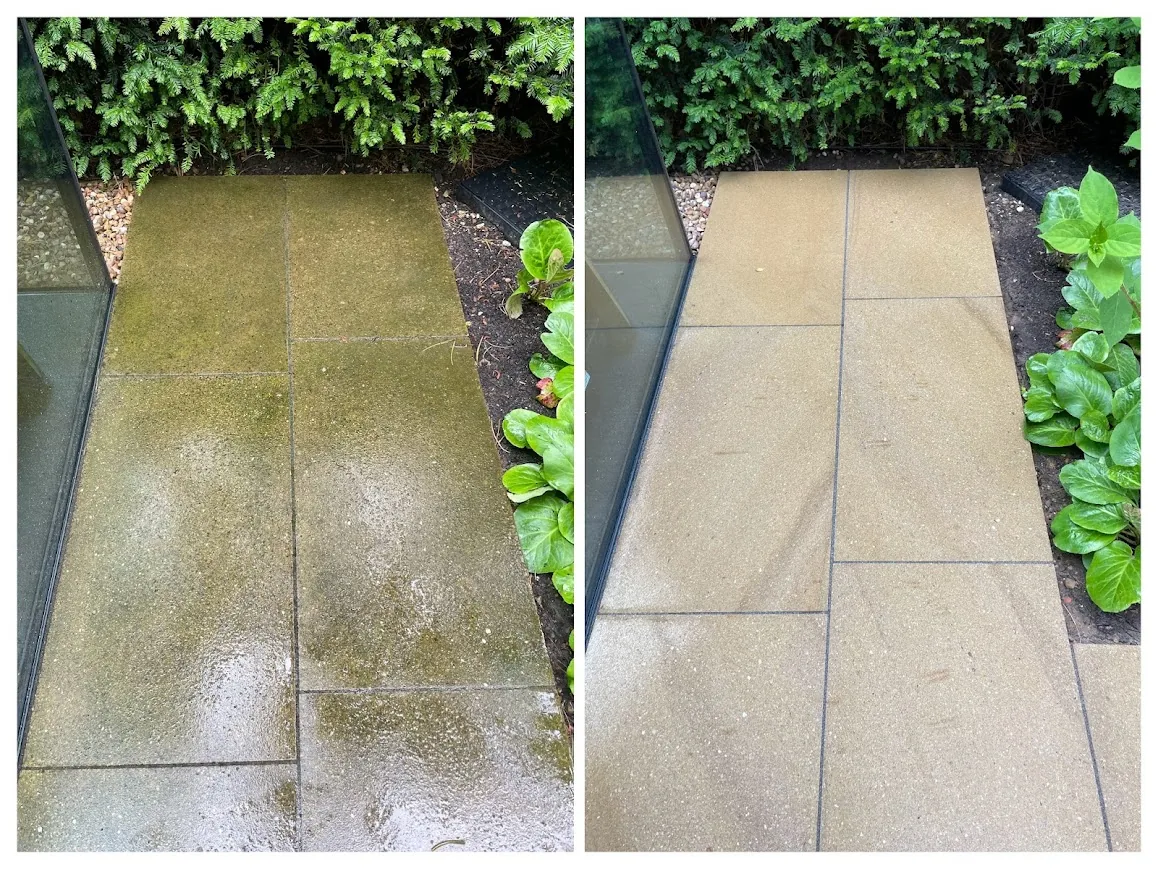

Genuine Hardfloor Restoration cleaning results. Results vary according to the surface and level of contamination.
When Ordinary Patio Cleaning Is Not Enough
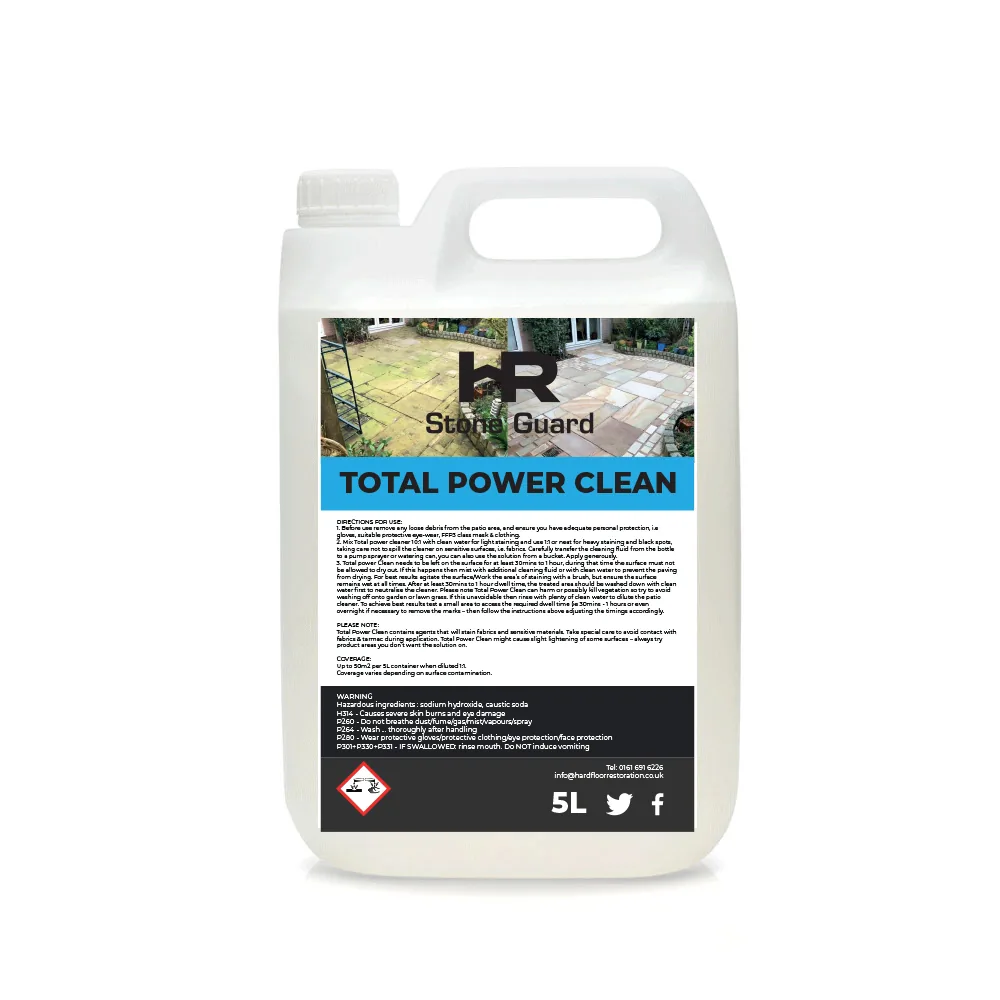
HR Total Power Clean is a concentrated 5 litre patio cleaning solution for established black spot, algae, lichen and ingrained outdoor grime.
It is supplied by Hardfloor Restoration, so the recommendation comes from people who actually clean and restore outdoor stone and paving, not simply from a product catalogue.
A Patio Cleaner Sold by People Who Actually Restore Stone
The cleaner is only part of getting a good result. You still need to identify the contamination, use the correct dilution, follow the label and treat the surface properly. That is why this page starts with the problem rather than simply telling everyone to buy the same bottle.
How to Use a Patio Cleaning Solution Properly
Choosing the right patio cleaner is only part of the job. Preparation, dilution, application and rinsing can all affect the final result.

Prepare the Patio
Remove loose leaves, soil and debris. Protect nearby plants, metals, fabrics and anything else that should not come into contact with the cleaning solution.
Choose the Correct Dilution
Follow the product label for the surface and contamination you are treating. Heavy black spot may need a different permitted dilution from light maintenance cleaning.
Apply and Let the Cleaner Work
Apply the solution evenly and keep the area wet for the recommended working period. Agitate stubborn areas where needed and do not allow the cleaner to dry on the surface.
Rinse Thoroughly and Check the Result
Rinse completely with clean water. Once the patio is clean, assess the result rather than automatically applying more product. Long established black spot can sometimes need a second controlled treatment.
Before You Start
Always read the current product label, wear the stated protection and test a small hidden area first. Never mix patio cleaning chemicals. Keep children and pets away while cleaning and follow the product instructions before allowing normal use of the area again.
Dealing with black spot, algae, lichen or ingrained outdoor grime? See the full instructions and product details for HR Total Power Clean.
SEE THE FULL CLEANING GUIDEPatio Cleaning Solution FAQs
Still deciding what to use? These are some of the most common questions people ask before cleaning patio slabs, stone and outdoor paving.
What is the best patio cleaning solution?
What is the most effective patio cleaner for black spot?
What is the best product for cleaning patio slabs?
Can I clean my patio without a pressure washer?
Can I make a homemade patio cleaning solution?
What should I use for green algae on a patio?
What should I use for oil or grease on patio slabs?
What removes orange or rust marks from stone?
What removes white or chalky marks from paving?
How do I know which patio cleaning product to buy?
Still Comparing Patio Cleaners?
Our buyer's guide looks at the different types of patio cleaner and what matters when choosing one for black spot, algae and outdoor grime.
COMPARE PATIO CLEANERSChoose the Right Next Step
You should now have a better idea of what is making your patio dirty, what type of cleaner you need and whether you want to tackle the job yourself.

Black Spot, Algae or Lichen?
If that is what you are dealing with and your patio surface is suitable, HR Total Power Clean is the product to look at.
It is a concentrated 5 litre patio cleaner for stubborn outdoor organic contamination, supplied by Hardfloor Restoration.
Compare Patio Cleaners First
If you are not ready to choose yet, our patio cleaner buyer's guide explains what to look for and how different cleaning options compare.
READ THE PATIO CLEANER BUYER'S GUIDELet Hardfloor Restoration Clean It
For heavily contaminated patios, valuable natural stone or jobs you simply do not want to tackle yourself, Hardfloor Restoration provides professional cleaning in Manchester and Cheshire.
ASK US ABOUT PROFESSIONAL CLEANINGWhatever route you choose, start with the same two questions: what are you trying to remove, and what is the patio made from? Get those right and choosing the correct patio cleaning solution becomes much easier.