
Grout Cleaner for Dirty Grout, Stains & Grout Haze
Your grout doesn't need the strongest cleaner. It needs the right one.
Blackened, greasy or heavily soiled grout needs a very different treatment from the cloudy haze and cement residue left behind after new tiles are installed. Tell us what you can see and we'll show you the correct solution.


What Are You Actually Trying to Remove?
Dirty grout, grout haze and efflorescence can all leave a floor looking dull, patchy or stained — but they are not the same problem and shouldn't automatically be treated with the same cleaner. Choose the description that looks closest to your surface.

Is Your Grout Dirty, Dark or Greasy?
If the grout has gradually become darker through everyday use, dirt, grease, grime or general contamination, you normally need a deep cleaner rather than an installation-residue remover.

Is There a Cloudy Film Across the Tiles?
If the problem appeared after the tiles were laid or grouted, the marks may be grout haze or a light cement film rather than ordinary dirt.

White Salts or Heavier Cement Residue?
A white powdery or crystalline deposit can be efflorescence, while thicker installation marks may be heavier cement contamination. These need a more targeted treatment.

 HR Future Clean
Dirty Grout? Start With the Dirt — Not the Grout.
Grout often looks as though it has permanently changed colour, when in reality years of dirt, grease and cleaning residue have become trapped in its textured surface.
Because grout is more porous and textured than the tile around it, contamination can build up gradually until the original colour is almost hidden. HR Future Clean is our professional-strength cleaner for everyday dirt, grease, grime and ingrained contamination. It gives you a very different approach from reaching straight for a grout-haze or cement-removal product when the problem is actually ordinary accumulated dirt.
If the grout became darker gradually, Future Clean is the route we'd normally investigate first. If the marks appeared immediately after installation and look pale, cloudy or cement-like, move to our grout-haze section instead.
New Tiles — So Why Do They Still Look Dirty?
You've cleaned the floor, perhaps more than once, but when it dries that cloudy film seems to come straight back.
That can be a classic sign of grout haze — fine grout or cement residue left across the face of the tile during installation. It can make brand-new porcelain and tiled surfaces appear dull, smeared or permanently dirty even though ordinary dirt isn't actually the problem.

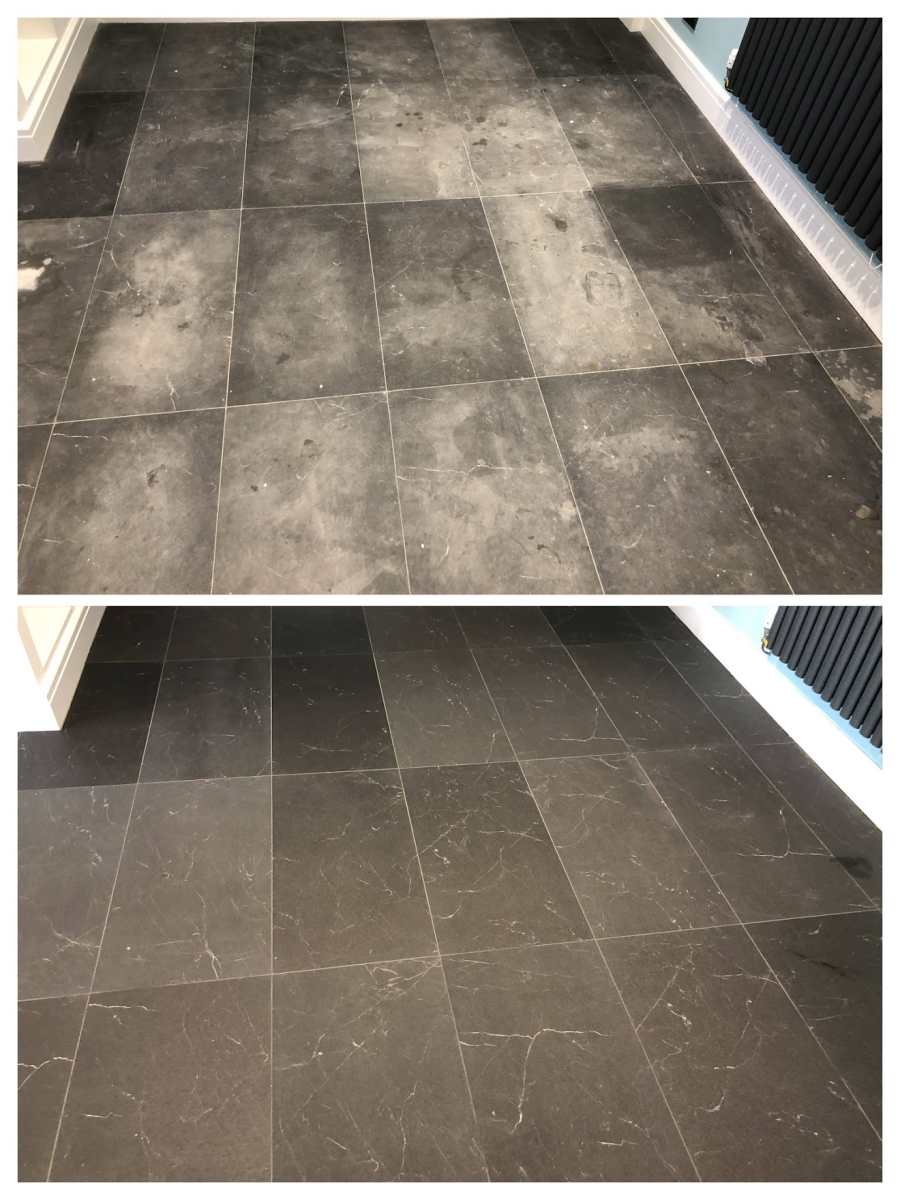
Treat the Cause, Not Just What You Can See.
Grout haze is different from everyday contamination. That's why understanding the problem first matters: you don't need a stronger version of an ordinary cleaner — you need the correct type of cleaner.
Always check product suitability for the particular tile or stone you're treating and test a small inconspicuous area before tackling the whole floor.
White Salts, Cement Marks or Stubborn Building Residue?
Some marks need more than an everyday grout cleaner. Efflorescence and heavier cement residue are different forms of contamination and need to be identified correctly before treatment.
First Work Out What You're Looking At.
Efflorescence is usually seen as a white, powdery or crystalline deposit caused by soluble salts reaching the surface. Cement contamination can look heavier, harder and more bonded to the tile or stone. Neither should automatically be treated as normal dirty grout.
Cement and mineral-removal products can be more aggressive than general cleaners. Always check compatibility with the tile or stone first and test a small area before wider treatment.
How to Clean Grout Properly
The product matters, but so does the way you use it. A controlled cleaning process usually gives a better result than simply applying more chemical or scrubbing harder.
Correct product selection, dwell time, agitation and thorough rinsing often matter more than simply increasing the concentration. Always follow the instructions for the particular cleaner you're using.
Porcelain, ceramic and acid-sensitive natural stones such as marble and limestone do not all respond to cleaning products in the same way.
Cleaning porcelain? Read our porcelain guide →Frequently Asked Questions
The right answer usually starts with identifying whether you're dealing with ordinary dirt, installation residue or a mineral deposit.
What is the best cleaner for dirty grout?
For grout that has gradually become darker through everyday dirt, grease and grime, start with a cleaner designed for that type of contamination rather than immediately using a cement or grout-haze remover. Our HR Future Clean is the route to look at for everyday and ingrained contamination.
How do I know if I have grout haze rather than dirty grout?
Grout haze usually appears after installation or grouting and often looks like a pale, cloudy film across the face of the tile. Dirty grout tends to darken gradually through use. If your floor looks better while wet but becomes cloudy again as it dries, read our grout haze removal guide .
Can I use the same grout cleaner on every type of tile?
No. Porcelain, ceramic and natural stones such as marble, limestone and travertine can respond differently to cleaning products. Always check the product instructions and test a small inconspicuous area first. For porcelain-specific information, visit our porcelain cleaning and care hub .
Why does my grout become dirty again so quickly?
Porous grout can collect fine dirt, grease and cleaning residue more readily than the surrounding tile. Leaving dirty cleaning solution or excess product residue behind can also contribute to rapid re-soiling. Thorough rinsing and removal of released contamination is an important part of the cleaning process.
What are the white marks appearing around my grout or paving?
White powdery or crystalline marks may be efflorescence rather than ordinary dirt or grout haze. Read our efflorescence removal guide or see our specialist Efflorescence & Cement Remover .
What if cleaning alone won't restore the floor?
Sometimes the problem goes beyond surface contamination. Scratches, etching, worn finishes, damaged grout, staining or deterioration can require professional restoration rather than another cleaning product. Learn more about our hard floor restoration services .
Now You Know What You're Looking At.
Dirty grout, grout haze and efflorescence may look similar at first glance, but they need different solutions. Identify the problem, check the surface and choose the cleaner designed for the job.