
Patio Sealer: Which Type Is Right for Your Patio?
Choosing a patio sealer is not only about protecting the surface. You also need to decide what you want the patio to look like afterwards.
Some people want their stone to keep its natural dry appearance. Others want to bring back the deeper colour they see when the patio is wet. The right choice also depends on the material, how porous it is and whether anything has already been applied.
 Colour enhancement on real sandstone
 Black limestone
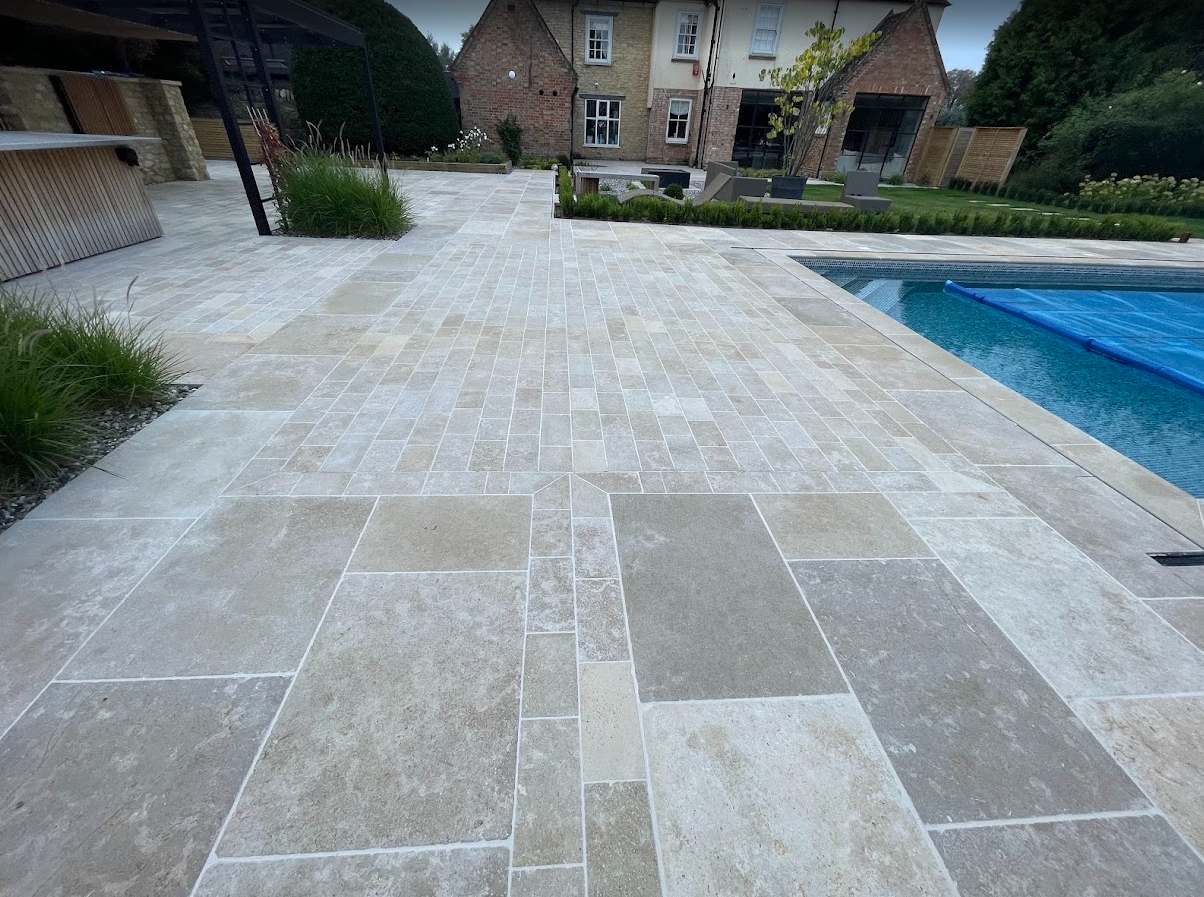 Natural matt protection
Which Patio Sealer Should I Choose?
For most people, the easiest place to start is not with chemistry. Start by deciding how you want the patio to look once the sealer has been applied.
Keep the Patio Looking Natural
If you like the colour of the patio when it is clean and dry, you probably do not want a sealer chosen specifically to darken or enrich the surface.
HR Total Finish Matt is our route for compatible surfaces where the aim is protection while retaining a more natural appearance.
View HR Total Finish Matt
Bring Out More of the Stone's Colour
If you prefer the deeper colour your stone shows when damp, a colour enhancing treatment may be a better fit.
HR Colour Enhancer is designed for compatible porous surfaces where the customer deliberately wants richer natural colour and stronger variation.
Explore HR Colour EnhancerTopical Patio Sealer vs Impregnating Patio Sealer
These terms can make patio sealing sound more complicated than it needs to be. The basic difference is where the treatment works.
Topical Sealer
A topical treatment works mainly at or on the surface. Depending on the product, it may leave a more obvious surface finish.
That can be useful where a particular coating or visible finish is deliberately wanted, but it also means preparation and compatibility are especially important.
- Works mainly at the surface
- May visibly alter the finish
- Existing coatings matter
- Not automatically the right answer for natural stone
Impregnating Sealer
An impregnating sealer is absorbed into a compatible porous material rather than relying on a heavy coating sitting over the surface.
It is a common route where the aim is to protect porous stone while keeping the surface looking and feeling more like stone.
- Penetrates compatible porous material
- Does not rely on a heavy surface film
- Can be natural finish or colour enhancing
- Absorption varies between surfaces
Do You Want the Patio to Look Different After Sealing?
This is one of the most important questions on the page.
Natural stone can look noticeably richer when it is wet. Reds can become deeper, darker stone can become stronger and the variation between individual pieces can become much more obvious.
Some homeowners love that appearance. Others want the patio to look almost exactly as it does when clean and dry.
Neither is automatically better. They are simply different finish choices.
The Right Patio Sealer Depends on What Your Patio Is Made From
Do not choose a sealer only because the bottle says "patio". Different paving materials absorb treatments differently.
Porcelain is much denser than porous natural stone and should not automatically be treated like sandstone or limestone. Check whether the particular porcelain and treatment are compatible before applying any sealer.
Is Your Patio Actually Ready to Be Sealed?
A good sealer cannot correct poor preparation. If dirt, old coatings, biological growth or other contamination is still causing a problem, deal with that first.
Is It Properly Clean?
Do not use sealer as a way of hiding black spot, algae, grime or staining.
Is There Old Sealer?
An unknown previous treatment can change absorption and compatibility.
Is the Surface Suitable?
Identify the paving material rather than assuming all patios behave in the same way.
Have You Tested It?
Test a small area first so you can see the actual finish on your own patio.
Our Patio Sealer Options
Both products have a different job. Choose according to the surface and the appearance you want rather than simply choosing the one with the strongest sounding name.
HR Total Finish Matt
Best considered when the aim is protection without deliberately creating the richer, darker appearance associated with a colour enhancing treatment.
- Choose it when: you prefer a natural appearance
- Finish goal: matt rather than wet look
- Important: check compatibility with the actual surface
- Before use: prepare and test the patio first
HR Colour Enhancer
Best considered when you deliberately want compatible porous stone to show deeper colour and stronger natural variation.
- Choose it when: you like the stone richer and darker
- Finish goal: enhanced natural colour
- Important: results vary with the stone
- Before use: always test a small area first
Patio Sealing Results From Real Projects
These are the kinds of finish changes that are difficult to understand from a product label alone.


Common Patio Sealing Mistakes
Most sealing problems are easier to prevent than correct.
Choosing by Name Alone
"Patio sealer" does not tell you whether the product is right for your material or desired finish.
Not Testing the Finish
Colour enhancing treatments can change natural stone considerably. Test before committing to the whole patio.
Sealing Over a Problem
Dirt, staining or failed old treatments need diagnosing before another product is applied.
Treating Every Patio the Same
Sandstone, limestone, concrete and porcelain do not all absorb treatments in the same way.
Frequently Asked Questions
What is the best patio sealer?
There is no single best sealer for every patio. The right product depends on the paving material, its condition, any previous treatment and whether you want a natural or colour enhanced finish.
What is the difference between topical and impregnating patio sealers?
A topical treatment works mainly at or on the surface. An impregnating sealer penetrates into a compatible porous material. The finish and suitability still depend on the individual product.
Does patio sealer change the colour?
Some treatments are deliberately chosen to enhance colour while others are selected to retain a more natural appearance. Always test the actual product on your patio first.
Can I put new patio sealer over old sealer?
Do not assume that two treatments are compatible. If an old sealer or coating is present, identify its condition and compatibility before applying another product.
Should I seal Indian sandstone?
Sealing can be appropriate for sandstone, but the correct choice depends on the actual stone, its condition and the finish you want. Sandstone can vary considerably in porosity, so testing is important.
Can I seal a dirty patio?
Sealer should not be used to hide unresolved dirt, biological growth or staining. Clean and prepare the surface properly before sealing.
Will patio sealer stop black spot coming back?
A sealer should not be treated as a guarantee that biological contamination can never return. Keep the patio maintained and use the correct cleaning approach for the surface and contamination involved.
Do porcelain patios need sealing?
Porcelain is generally much denser than porous natural stone. Do not automatically apply a stone impregnating sealer to porcelain. Check the exact paving and product compatibility first.
Should I choose matt or colour enhancing patio sealer?
Choose according to the appearance you want. If you want the patio to retain a more natural dry appearance, look at HR Total Finish Matt. If you deliberately want deeper colour on a compatible porous surface, look at HR Colour Enhancer.
Natural Looking Patio or Richer Colour?
If you know which finish you want, the next step is simple. Choose the product route that matches the result you are trying to achieve.
Check the product instructions, surface compatibility and test area before full application.